Tag Archives: photos

Best Fried Chicken EVER: French Laundry Style

Standard

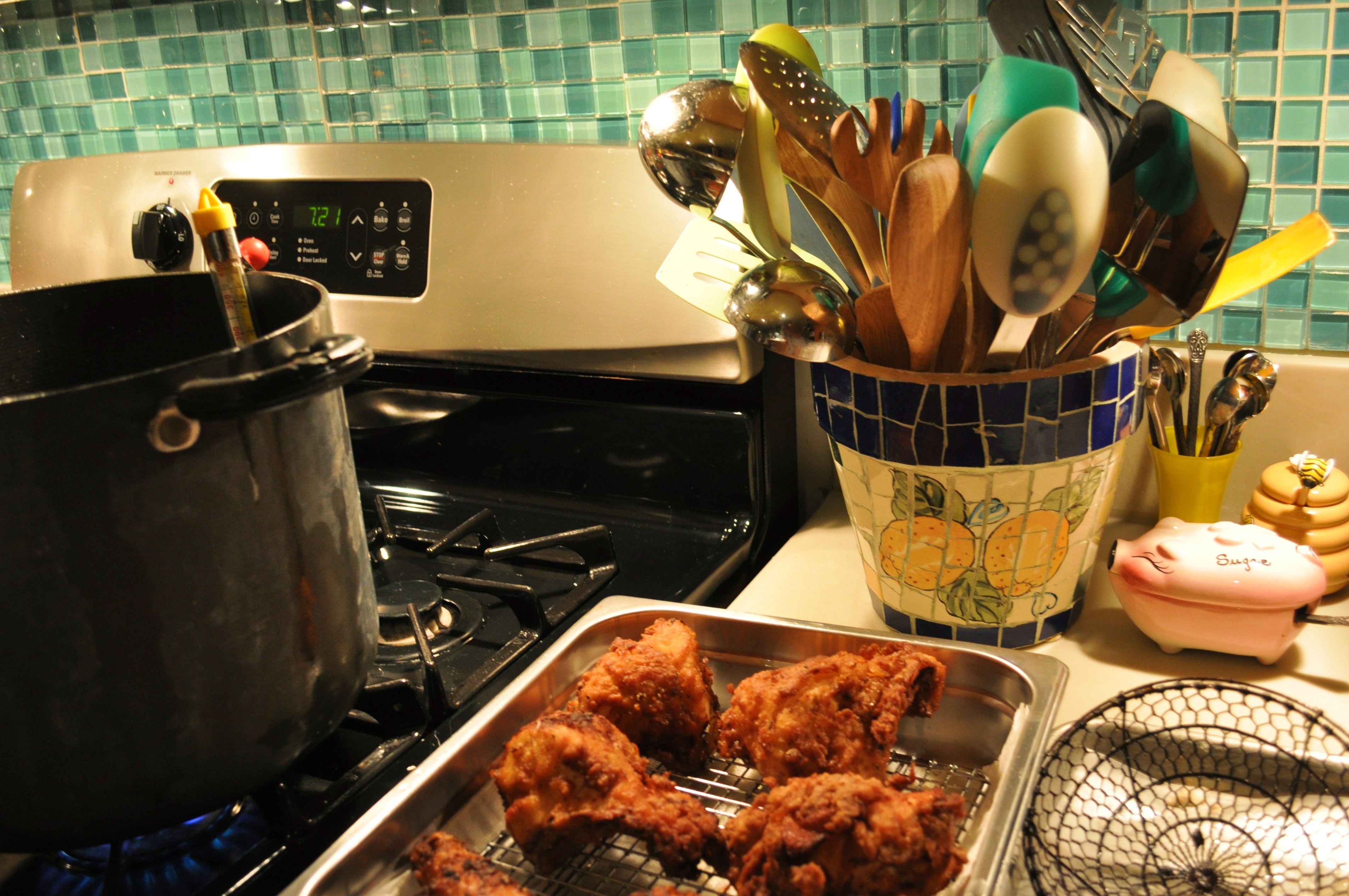
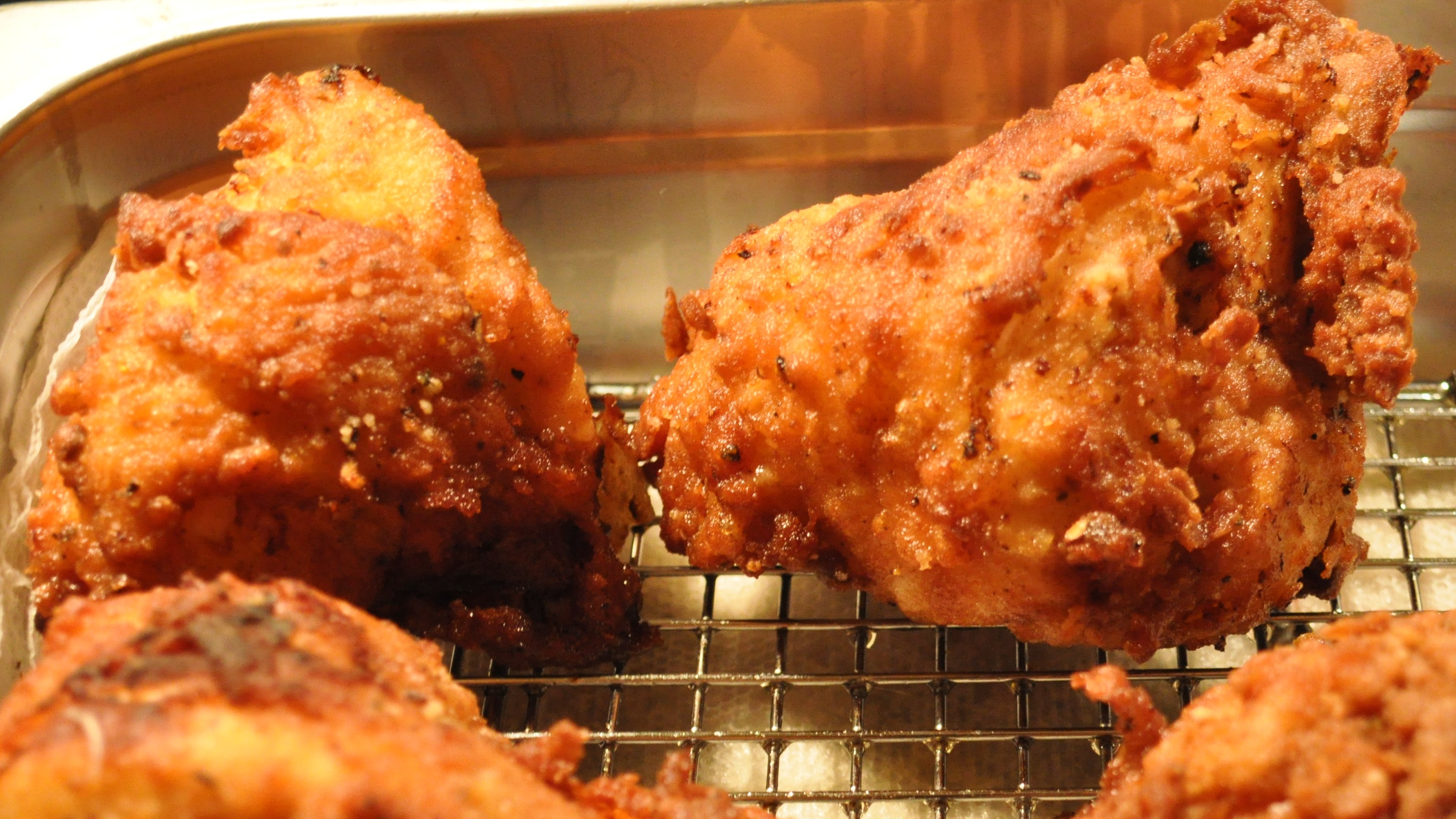
This is the first fried chicken I have had since moving to Charleston. Nothing says the south quite like fried chicken with mashed potatoes and gravy. Thomas Keller of the French Laundry  fame serves this chicken at Ad Hoc every Tuesday. This is quite simply the best fried chicken ever. I have tweaked it a bit from the original recipe after making it a few times. Less bay leaves, added peppers, fresh turmeric, honey in the buttermilk and some other changes. The brine maintains texture and flavors the chicken. It is delicious hot or cold. The buttermilk and honey impart a tang and sweetness. The coating fries perfectly if you maintain the temperature of the oil.
You need to start this ahead of time, it takes two days to make. The first 24 hours is brining in the refrigerator, but the active time for frying the chicken is no longer than any other recipe of fried chicken.
In my house it is for special occasions, as each piece is about 500-700 calories depending on if you eat the skin (and WHY wouldn’t you?).

For the Brine:

1 gallon water
1c kosher salt
1/2cup of honey
1/2 cup raw sugar
2 bay leaves
2 heads of garlic cut in half
¼ cup yellow mustard seeds
1 finger of fresh turmeric grated (2 Tablespoons of ground turmeric if you cannot find fresh)
1 small hand full of whole black peppercorns
2 large stalks of lemon grass bruised
5 large rosemary sprigs
1 bunch thyme
1 bunch parsley
Zest, juice and rind of 3 Meyer lemons
5 habanero chiles cut in half
4-6 # of chicken parts (Split breasts are quite large these days, so if you find yours extra large, use a cleaver and cut each breast in half)

For Frying:
6c flour
3T garlic salt
5T onion powder
2 T paprika
4t cayenne
1T fresh black pepper
2t kosher salt (I use smoked Hawaiian salt)
6c buttermilk
1/2 cup of honey
12c peanut oil (or freshly rendered lard)

Method:

Place all of the brine ingredients in a large pot and heat till the sugar and honey melt. Remove from stove and allow to cool. To speed this process up, you can use ¾ gallon of water and then add 4 cups of ice cubes after cooking.
When completely cool add chicken parts. Refrigerate for 12-24 hours.
Mix together the honey and buttermilk.
Buttermilk Bath
Remove the chicken from the brine and pat dry with paper towels
Add to the honey and buttermilk and allow to soak for at least one hour and up to 12 hours.
Heat the oil/lard in a very large deep pot to 300˚, try to maintain this heat during cooking, do not let the oil get too hot.
Mix together the flour and seasonings in a large pan.
One piece at a time, take each chicken piece out of the buttermilk mixture, coat with flour, shake off excess and then dunk again in the buttermilk and coat again in flour.

Set the chicken pieces on a large baking sheet lined with waxed paper. Allow the chicken to sit at room temperature for 30 minutes to one hour.

Start frying, two to three pieces at a time, do not crowd the chicken. It would be even better to do it one piece at a time so the oil maintains the 300˚ temperature, but that is time consuming. Use a candy thermometer to maintain the temperature as close to 300˚ as possible. When the chicken is golden brown (about 12 minutes for legs and thighs, 7 minutes for ½ breasts) use an instant read thermometer to check doneness. It should read 160 ˚. Remove and place on a sheet pan in a warming oven no warmer than 120 degrees.


Serve while warm.

Making Perfect Potato Chips; Bet you can’t eat just one!

Standard


Somethings are so simple and yet we don’t often take time to make them. Potato Chips are one of those things. Sunday morning I decided to do BLT sandwiches for brunch. I thought about making hash browns or fried potatoes as a side and then suddenly a light bulb came on , Potato Chips! Having  just moved, I had already unpacked the necessary tools. I had the big pot of peanut oil, the mandoline and some potatoes. I had some of what I call “Devany Seasoning.” It is an all purpose flavor enhancer with smoked salt, smoked paprika, pepper, a bit of sugar and whatever spices I am cleaning out when I make it. This is so simple, I can hardly call it a recipe, it is much more of a method. There are just a few hints as to how to do this. First I put the bacon in the oven so it would be ready for the sandwiches when the chips were finished frying.
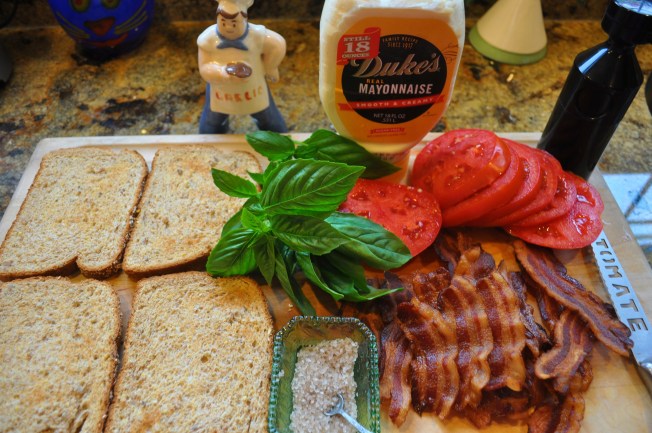
Mise en place for BLT

As in all cooking, get everything out that you will need, Mise en place is the culinary term for having every thing ready and in place before you start preparing a meal. It is probably the single most important thing you can do when preparing a dish. We can probably thank Escoffier for this, as he was famous for running an efficient kitchen. Once everything is set   in place, start cooking.

Ingredients: 

Russet Potatoes, washed well. I leave the skins on. You will be cutting these paper thin, you may as well skip the peeling and go for the nutrition that is in the skin. You can also do this with other root vegetables such as  sweet potatoes, taro and even carrots.

Peanut or Canola oil in a large deep pot or fryer. Peanut oil has a high burning point and is great for frying. You can find it for a really good price in stores that sell turkey fryers.

Seasoning. You can use sea salt, BBQ seasoning or other flavors. Next time I am using truffle salt.

Equipment: 

You will need a mandoline to cut the chips into very thin slices. It can be done with a knife, but it is doubtful that you will be able to consistently cut uniform paper thin slices. If you do not already own a mandoline, there are many inexpensive models available.

If you do not own a deep fryer, you will need a large deep pot. This prevents splattering.

You will also need a rack to drain the chips on. I use a steam table pan and rack, but you can use a sheet pan with a cookie rack. If you do not have a rack, you can use paper towels, but do change them out as they get drenched with oil.

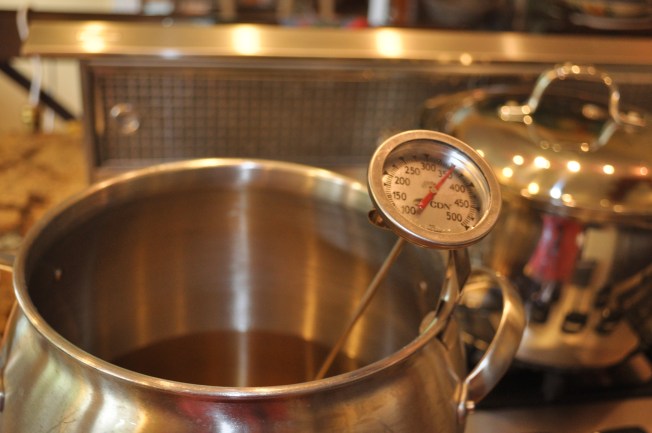
A fat thermometer is quite helpful. This looks like other instant read thermometers, but it has a very long probe and can be attached to the side of the pan. This is a tool that is helpful for making jams, candy & cheese. I use mine a lot. You need to maintain a consistent heat of 350 degrees. If you do not have one of these, you can eyeball it, but you will have much better success if you use a thermometer.

A spider to remove the chips from the oil.
Method: 

Pre-heat the oil to 350 and then turn the heat down slightly to maintain that temperature.

Using the mandoline on the thinnest setting possible, evenly slice the potatoes, one at a time. One potato will take 4-5 frying sessions. You do not want to crowd them.

In batches, gently drop the slices , one at a time into the oil. Turn them using the spider and separate any that are touching each other. Note, these cook very fast, you must give them your full attention while frying.

Place the chips on the draining rack and IMMEDIATELY season. Doing the seasoning immediately will make it adhere better.

Once the chips have cooled slightly they can be placed in a bowl. If you are making them ahead of use,  wait till all are completely cool and then place them in an airtight container. They never last very long at our house, but they do keep well for several days if you need to do them in advance.

Home made fries with a BLT. Mr. Garlic approves
Grilled Corn and Lobster Chowder

Standard

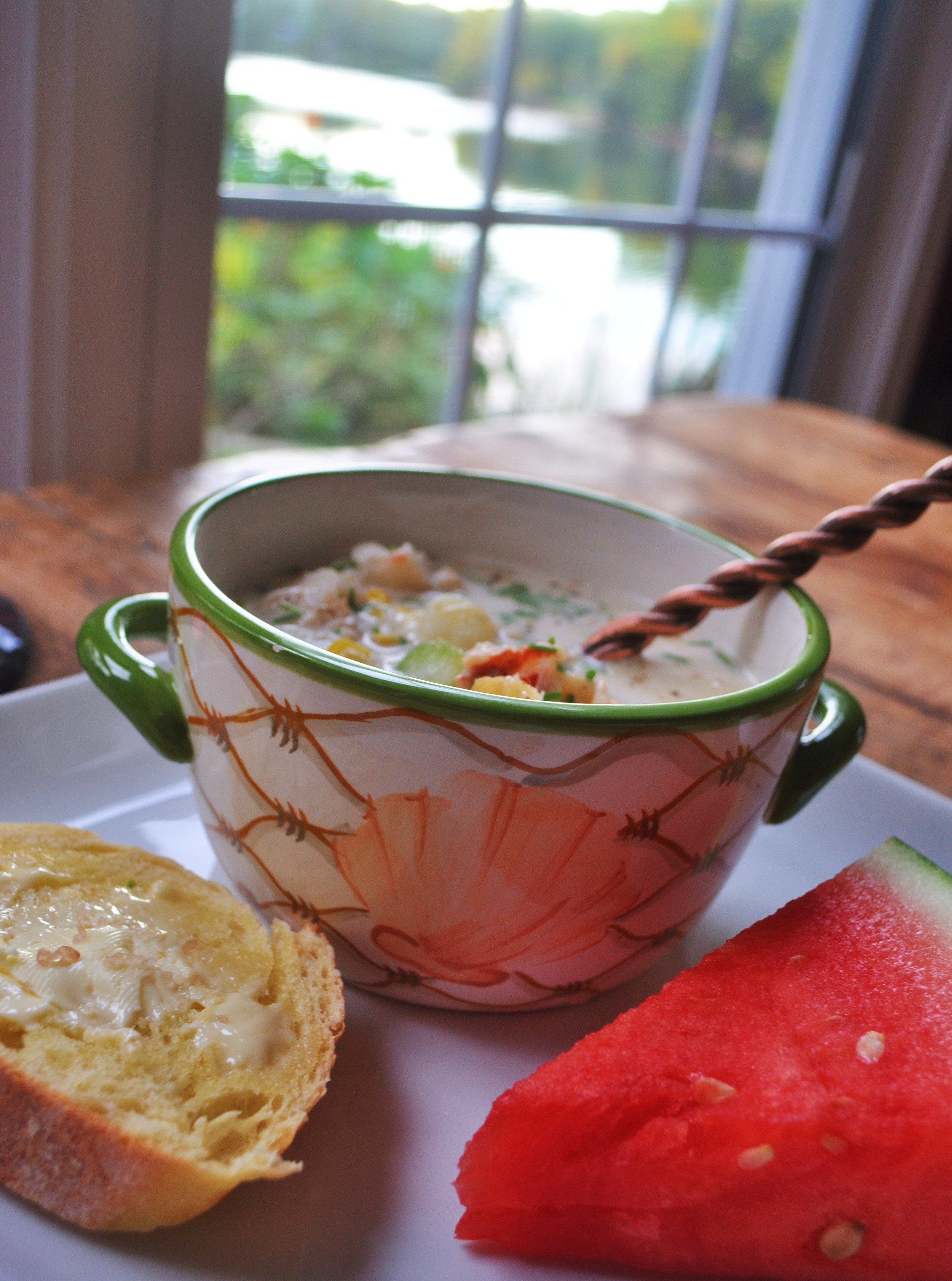
It is the peak of summer. Time for lobster and corn on the cob. While both are abundant, I decided to make a Chowder on a rainy summer day. It is not hard at all. I used lobster tails that I found on sale and some claws I had frozen for this, but usually I use live lobsters. I always save the shells for stock. This makes enough for 6 servings and reheats well.

Ingredients: 

  • 2 (1 1/2-pound) cooked lobsters, cracked and split (reserve shells) Boil in Spice and Tea Exchange Crab and Shrimp Boil
  • 4 ears corn

For the stock:

  • 6 tablespoons (3/4 stick) unsalted butter
  • 2  yellow onions finely chopped
  • 1/2 cup sherry
  • 1 teaspoon sweet smoked paprika
  • 4 cups whole milk
  • 2 cups heavy cream
  • 1 cup dry vermouth

For the chowder:

Method:

  • Remove the meat from the shells of the lobsters. Cut the meat into large cubes and place them in a bowl. Cover with plastic wrap and refrigerate.
  • Reserve the shells and all the juices that collect.
  • Grill the corn by removing the stocks and silk, spray lightly with olive oil. Grill on medium heat for 2 minutes on each side.
  • Allow the corn to cool, then cut the corn kernels from the cobs and set aside, reserving the cobs for stock. I use a great corn cutter made by OXO. It really works well. There are not a lot of gadgets that impress me, but this one does.

For the stock:

  • Melt the butter in a stockpot or Dutch oven large enough to hold all the lobster shells and corncobs.
  • Add the onion and cook over medium-low heat for 7 minutes, until translucent but not browned, stirring occasionally.
  • Add the sherry and paprika and cook for 1 minute.
  • Add the milk, cream, wine, lobster shells and their juices, and corn cobs and bring to a simmer. Partially cover the pot and simmer the stock over the lowest heat for 30 minutes.

For the chowder:

  • In another stockpot place the shallots, celery and butter or olive oil. Stir until slightly translucent.
  • Add the potatoes, corn kernels, salt, and pepper to the same pot and saute for 5 minutes.
  • Add the flour and stir in and add a ladle full of the stock.
  • Remove the largest pieces of lobster shell and the corn cobs with tongs and discard.
  • Place a strainer over the soup pot and carefully pour the stock into the pot with the potatoes and corn.
  • Simmer over low heat for 15 minutes, until the potatoes are tender. Add the cooked lobster, the chives,  and the sherry and season to taste. Heat gently and serve hot.

Squash Blossoms

Standard

Image

Squash or pumpkin blossoms offer up multiple opportunities. While in cooking school in Mexico, we used them as a filling ingredient for quesedillas, empanadas and tacos. They were also tossed in salads and soups for color and nutrition. Of course they are also lovely when filled and fried or baked. Squash blossoms are a unique ingredient. Unless you have a big patch of squash or pumpkins, you are at the whim of the farmer who brings these highly perishable ingredient to market. At the Charleston Farmer’s Market yesterday, I spied a little box of the blooms and grabbed it. My mind was swimming with filling ideas as we drove home. I decided on some queso fresco that I bought at a small Hispanic market on John’s Island with herbs and peppers & a little mascarpone for smoothness.

Image

The recipe:

Ingredients

10-12 squash blossoms

1/2 cup queso fresco ( you can also use a creamy feta) allow it to warm up to room temperature

1 jalapeno or hotter pepper if you want more spice cut into small pieces

3 tablespoons mascarpone or cream cheese

a hand full of grated jack cheese

1 Tablespoon TSTE Vik’s Garlic Fix

1 Tablespoon of TSTE Aleppo chile

6 sprigs of cilantro

salt and pepper to taste

For batter:

1 1/2 cups flour

1 can or bottle of beer

salt and pepper

Method

About 2 hours before you plan to serve, mix the beer and flour together with salt and pepper. Cover and leave on the counter.

Clean blossoms by brushing off any soil, do not run under water. Pull out the stamen.

For filling:

Place the cheeses, cilantro, Vik’s Garlic Fix, aleppo pepper, jalapeno and salt and pepper in the small bowl of a food processor. This can also be done by hand, but if you are doing it that way, you will need to finely chop the pepper and cilantro.

Pulse until the filling is smooth. Using a spatula, fill a small zip lock bag. Push all of the filling down so that there is no air in the bag. Just before filling cut a small piece of the corner off and pipe the filling into the blossom, carefully wrapping the petals around the filling. Leave the top 1/2 inch unfilled and twist to enclose the filling. Refrigerate.

In a large pot or fryer heat peanut or canola oil (at least 3 inches) to 375 degrees.

Image

Put a few stuffed blossoms into the batter and then place carefully into the hot oil. After about a minute of frying, turn the blossoms and allow them to fry till golden. Remove with a spider and drain. Serve immediately.

ImageYou can find another post of mine about squash blossoms made with sourdough batter here on my Hawaii blog.

Soba Simpatico!

Standard

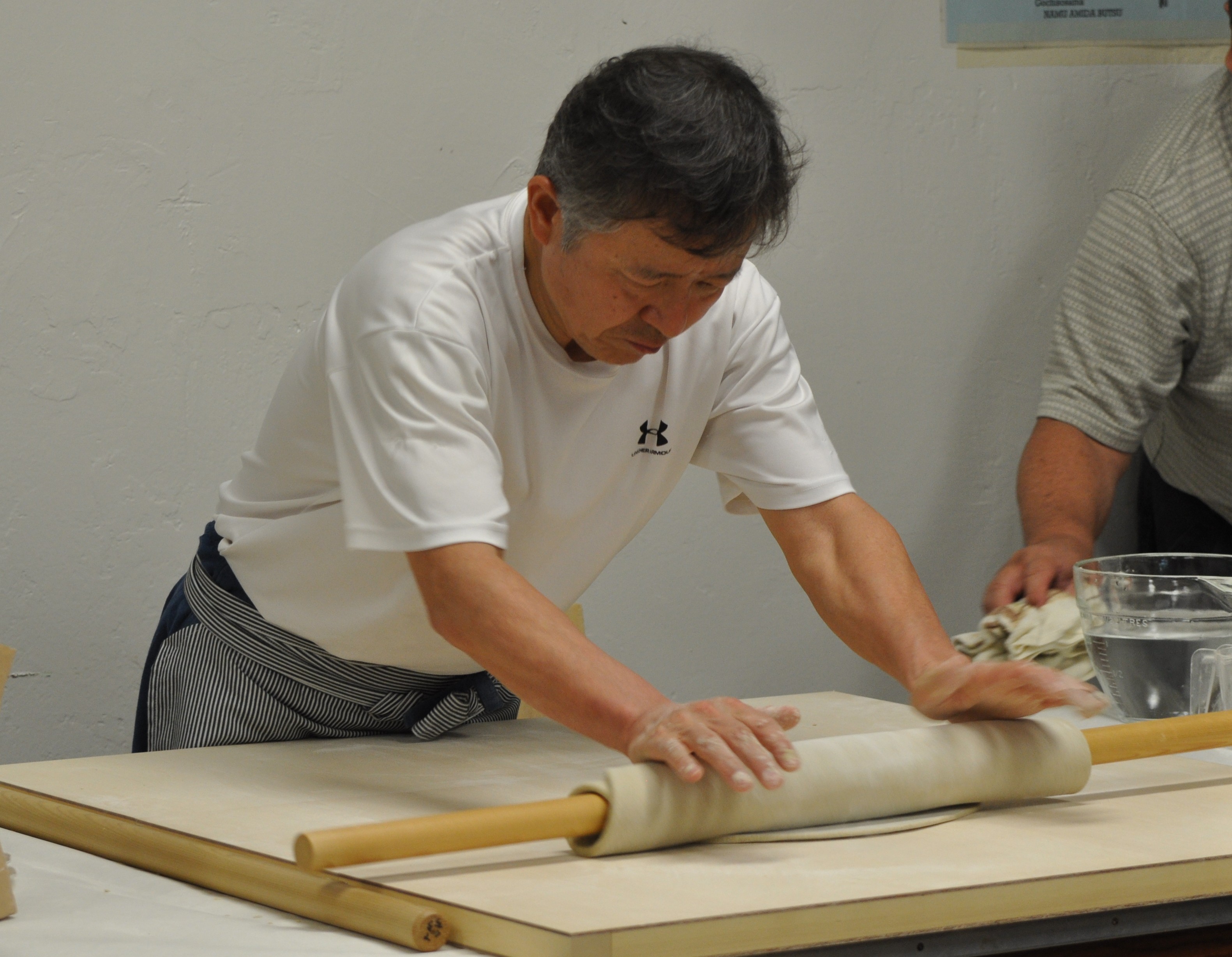
On Saturday I got to experience something really special. The Puna Hongwanji hosted a professional soba maker from Japan to teach a workshop on making soba. Mr. Yamaguchi came from Fukui Japan to teach us his craft. And I use the term teach loosely, as it takes an entire year of making soba three times a day before you can actually be considered a professional.  In Japan, soba and other noodles are made both by hand and also by manufacturing equipment. The handmade noodles are revered and sought out. Mr. Yamaguchi’s shop is one where the noodles are made daily, every day of the week, every week of the year by his wife, himself and a worker. He and his wife take separate vacations so that the shop never closes. In the shop, the soba master works behind a glass cage so that the customers are assured they are getting the freshest handmade product. Often there will be a slightly misshapen piece of noodle added to each bowl so that the customers are once again assured of a completely handmade product.

Before you read further, here is the video:

The heart of soba making is in the region of Japan called Fukui where a long tradition of growing and harvesting buckwheat is centered. Buckwheat is not a grain, but the seed of a flower.

The 54 year old soba maestro has traveling equipment set up that he stores in Hawaii because he comes here so frequently to do demonstrations. His equipment involves a large wooden shallow bowl for mixing the buckwheat flour and water that comprise the noodle dough, a 3’ X 3’ rolling surface which comes apart in three pieces, a 3’ X 1’ cutting board with 2 little folding legs to hold it onto the rolling surface, preventing slipping, an interesting device that has a hand guard for cutting the noodles and a very large long steel cleaver that is used to precisely cut the noodles. His final 2 pieces of equipment are the rolling pins, two long dowels about 1 ½ inches in diameter and 3’ long. Each piece of his equipment has a handmade quilted bag to protect it when not in use.

Soba (そば or 蕎麦?) is the Japanese name for buckwheat. It is synonymous with a type of thin noodle made from buckwheat flour, and in Japan can refer to any thin noodle (in contrast to thick wheat noodles, known as udon). Soba noodles are served either chilled with a dipping sauce, or in hot broth as a noodle soup. It takes three months for buckwheat to be ready for harvest, so it can be harvested four times a year, mainly in spring, summer, and autumn. In Japan, buckwheat is produced mainly in Hokkaido. Soba that is made with newly-harvested buckwheat is called “shin-soba”. It is sweeter and more flavorful than regular soba.

Since soba also means “next to,” there is a unique Japanese custom called “hikkoshi-soba (moving-in noodles).” People who have just moved into a new neighborhood, give their new neighbors soba while introducing themselves.

On New Year’s Eve there is a custom to eat “toshikoshi-soba (year-crossing noodles).” Because soba is fine and long, people eat them to wish for a long life. This became widespread in the Edo period.

The style of Mr. Yamaguchi’s noodles is is Echizen oroshi soba, or Summer Noodles. They are served cold with bonito flakes, spring onions and a sauce made of freshly grated daikon that was mixed with seasoning. The cooking liquid is also served alongside as a tea.  The seasoning for Echizen oroshi soba is usually made with soy sauce, mirin, water and sugar, but in this case because Mr. Yamaguchi believes that the daikon in Hawaii is sweeter than in Japan, he brought a bittering agent to counteract that sweetness.

Mr. Yamaguchi does not speak English, so an interpreter from the Puna Hongwanji was available to translate his meticulous instructions. First the dough is made. This process takes about 30 minutes. Special flour made from the heart of the buckwheat is ground into flour. Mr. Yamaguchi brought his custom made flour in pre-measured bags. Each bag made one batch of soba. He had to make 3 batches to feed the 40 people attending the class. He starts by emptying the bag of soba flour into the bowl and adding a precise amount of water a tiny bit at a time. He works the dough by hand assuring that the hydration occurs evenly. As he incorporates more and more water, the dough begins to form and he kneads it over and over into a smooth and elastic dough. Finally after working the dough into complete submission, he flattens it into a disk and then starts the rolling process. The disc eventually is flattened and thinned into a square shape. This process takes another 20-30 minutes. The entire time my head was spinning as I was thinking how much easier it would be with a pasta machine to roll it out. Then when the dough is as thin as it needs to be, the square is folded over three times with extra flour to keep it from sticking and the cutting begins. The noodles are quite thin, thinner than the commercially made soba that I have experienced. Each bunch of noodles consists of 28 cuts. The noodles are then shaken to rid the excess flour and laid out on a sheet to rest. At this point you could cover the noodles and refrigerate for up to three days, but it is best to use them fresh.

A large wok-pot on a commercial wok burner was filled with water and set to boil. Once boiling the noodles are added and cooked using a long set of chopsticks to occasionally stir. In about 5 minutes a noodle is removed and tasted and when the noodles are at the ready they are placed into a colander and immediately dunked into ice water and “washed”. Then they go through the process a second time in fresh ice water. They are then immediately drained and served in bowls. The daikon in sauce goes on top, then some green onion slices and finally a generous hand full of bonito flakes.

A cup of soba noodles has 113 calories. That compares with about 200 calories for a cup of white-flour pasta. The calories in soba noodles still are made up mostly of carbohydrates, at 24.44 g. That compares to about 40g carbs in a cup of regular pasta. There are 5.77g protein in soba noodles and 0.11g fats. About 92 percent of the calories in the noodles come from carbs, 20 percent from protein and 1 percent from fat.

If your are interested in learning more about the Puna Honwanji, you can go to their website or facebook page.

Something New~ The Sassy Spoon

Standard

It is time for a new blog at WordPress … just about the food. Coming soon this blog will feature food, cooking techniques and recipes along with delicious pictures. You can still visit My Hawaiian Home for archived recipes, photos and stories on Hawaiian culture and thoughts about life on an island in the middle of the ocean. Meanwhile, this blog will be more food specific and more user friendly because it is being done on WordPress. For constant updates be sure to follow this blog and new posts will be e-mailed to you.

Don’t forget about my photography blog DevPics and my ceramics website East Bay Potters.