So easy, so delicious and made with just a few simple ingredients. I served it with pasta as the extra sauce goes perfectly with it. We had a salad as a final course. I buy boneless breasts on sale and freeze. I always have lemons and capers on hand. and of course you can do this with veal or pork cutlets too.
Put the chicken breasts between two pieces of waxed paper and pound them with a meat hammer to about 1/4-inch thickness. Cut them up into pieces a little smaller than the palm of your hand.
Put the cheese and a bit of parsley into a mini processor and process till the cheese is about the size of couscous.
Mix together flour, salt, peppers, and grated Parmesan. Dredge the chicken in the flour mixture, until well coated. *Note some people like a thicker coating, if you do dredge in plain flour first, then in an egg wash and finally in the cheese and flour mixture. I like mine lightly breaded.
Heat olive oil and butter in a large skillet on medium high heat. Add half of the chicken pieces, do not crowd the pan. Brown well on each side, about 3 minutes per side. Remove the chicken from the pan and reserve to an oven proof pan. Place in a warming drawer or a 300 degree oven. Cook the remaining chicken pieces, remove from pan. Keep warm in the oven while you prepare the sauce.
On medium/low heat. Add the wine & lemon juice to the pan and stir to deglaze and loosen. Add capers to the pan. Reduce the sauce by half.
Plate the chicken and serve with the sauce poured over the chicken. Garnish with remaining parsley. Use extra sauce on pasta and toss.
If you have left over breading, you can toast it on a silpat and use it as a topping for other things.
This is a delicious way to use leftover ham, or an excuse to buy a ham just for the leftovers. The recipe originates from Mareen Priviet, a South African friend of mine who presented this very tasty appetizer at a dinner party in Chicago many years ago. Because of the ingredients I suspect that it comes from the 1950’s. I have always loved the interesting taste, the surprise of crunch and the fact that almost everyone who tastes this loves it. This makes enough to serve to 20 people, so if you have leftovers you can stir it all together to make a deviled ham sort of sandwich spread. I added a few things to the basic recipe, but it is so very good just the way it is. The original recipe calls for Miracle Whip, something I have never been able to stomach, so I use good mayo with some Meyer lemon juice. The most important flavor profile comes from Branston Pickle, a chutney like pickle from the UK. You can find it on the mainland in some stores that have a British food section. You can also order it online. The taste is extremely unique and I would not attempt this recipe until you have your hands on a jar of the REAL Branston Pickle. Branston Pickle is made from a variety of diced vegetables, including swede, carrots, onions, cauliflower and gherkins pickled in a sauce made from vinegar, tomato, apple and dates with spices such as mustard,coriander, garlic, cinnamon, pepper, cloves, nutmeg and cayenne pepper with sugar. Having said all of that, you really must get some Branston Pickle and go for it. Here is a recipe to make your own Branston Pickle, but it is not that difficult to find the original. The finished product resembles a haystack, hence the name. I promise you, EVERYONE loves this and will ask you for the recipe!
Ham Haystack
Ingredients:
6 cups ham, in medium chunnks two 8 oz. pkgs. cream cheese
1 1/3 cups mayonaise 3 tablespoons Meyer lemon juice (you can use other lemons, I just love Meyers)
2/3 cup sliced green onion 1/4 cup finely chopped mint
1 jar of Branston pickle relish 1 cup blanched, slivered almonds
Method:
Toast the slivered almonds on a silpat at 350 degrees for 20-30 minutes watching closely, till golden brown.
Stir the lemon juice into the mayonnaise
Chop the ham in a food processor till it is finely chopped
Combine ham with 8oz. of the cream cheese, 2/3 cup of the mayonaise, 1/2 cup slivered almonds (chop before adding), onion, mint & pickle relish. Mix well. Chill.
Shape into a cone-shaped mound.
Combine remaining mayonaise & remaining cream cheese and mix well (i used a food processor)
Frost mound with this mixture.
Chill slightly.
Cover with toasted, slivered almonds.
Serve with crackers or party rye bread.
Remember if there are leftovers, you can stir it all together and make a ham salad sandwich with the rest!
You may even get to see a cute bunny if you make this at Easter
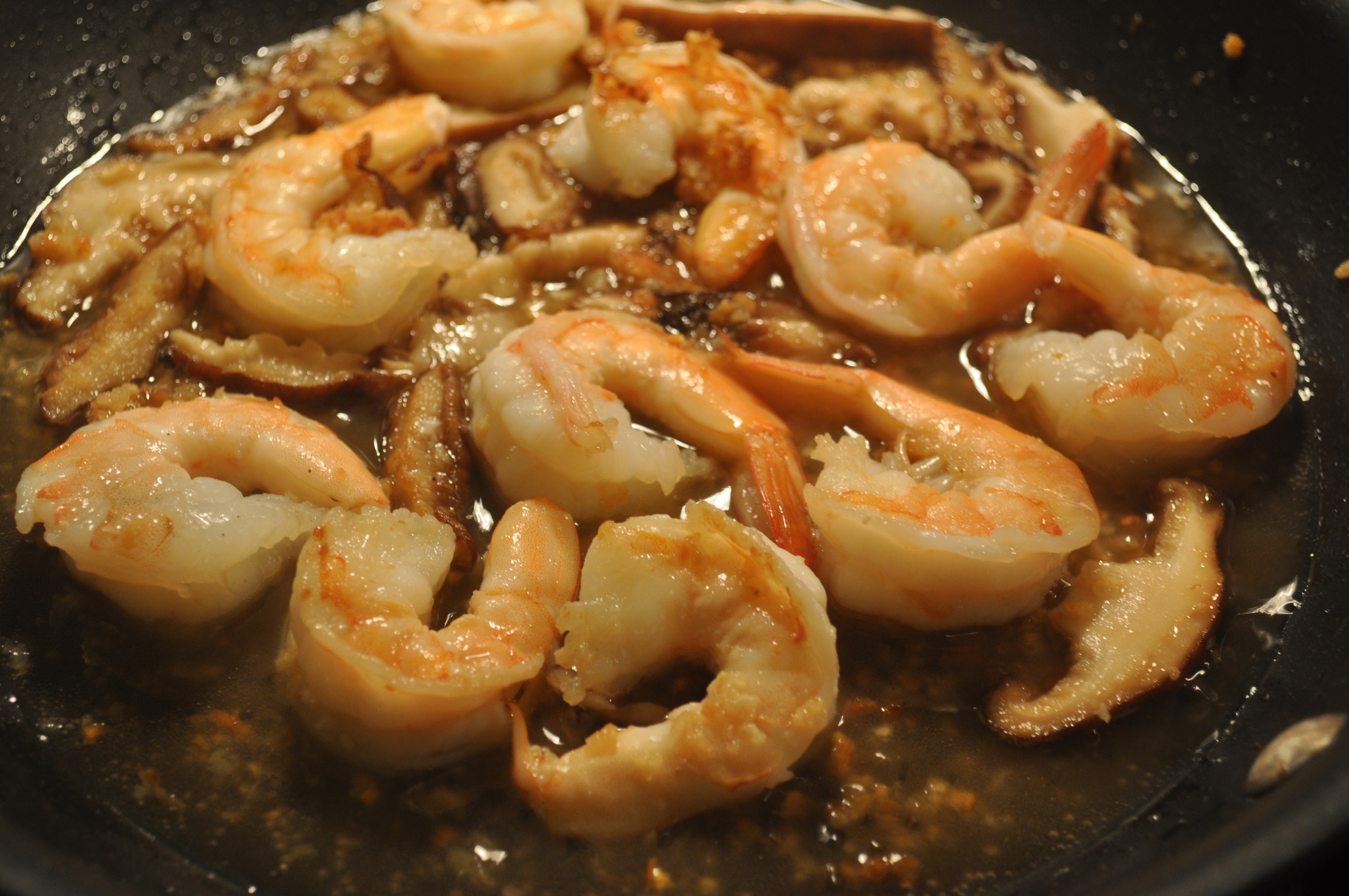
Based on a Thai Pumpkin Curry that I make, this silken & spicy dish definitely qualifies as SASSY in my book. It is easy to make, healthy and makes great leftovers. I steamed some Jasmine Rice with a few Kaffir Lime leaves and made my own sassy version of cucumber salad (recipe to follow on the next blog post.) I used the Japanese Kabocha pumpkin that is abundant year round in Hawaii, but you could use any tender squash or pumpkin. Kabocha is sweeter and more tender than most and you can even eat the skin. It cooks rather quickly as do the shrimp, which makes this a prime recipe to whip up on a week night. The splash of cognac adds another dimension of flavor.
Garlic Man is the mascot for The Sassy Spoon! He will be featured somewhere in every post!
Ingedients:
1 Kabocha Pumpkin cut in to 1″ squares
2 tablespoons curry paste (You can choose any style of curry paste, I have used yellow, green and red with this before. This time I used red).
2 cans of coconut milk
6-8 fresh kaffir lime leaves (there is no real substitute for this, but you can use lime zest).
1/2 pound of large raw shrimp (I used 18-21 per #)
2 tablespoons palm sugar (or dark brown sugar)
2 Tablespoons coconut oil
8 cloves fresh garlic finely minced
4-6 Shitake mushrooms, sliced thickly
splash of cognac (My “splash” is generous, about a jigger full)
Chopped cilantro for finishing
Method:
In a large hot wok put a large spoon full of the cream from the coconut milk and stir in the curry paste, allow the paste to warm up completely, then pour in one can of the coconut milk & the kaffir leaves, stirring constantly as it thickens.
Add pumpkin and cook for 10 minutes, add the second can of coconut milk and the sugar. Check pumpkin to see if it is cooked thoroughly, be careful not to over cook it or the pumpkin will be mushy. Turn off the heat.
In another pan add the coconut oil, shrimp and mushroom slices. Saute till the shrimp turns pink, about 2-3 minutes. Add the garlic and slightly brown it.
Add a splash of cognac and cook for 30 seconds more. Add all of this into the wok, turn the heat back up and simmer for a minute, then sprinkle with cilantro and serve over rice.
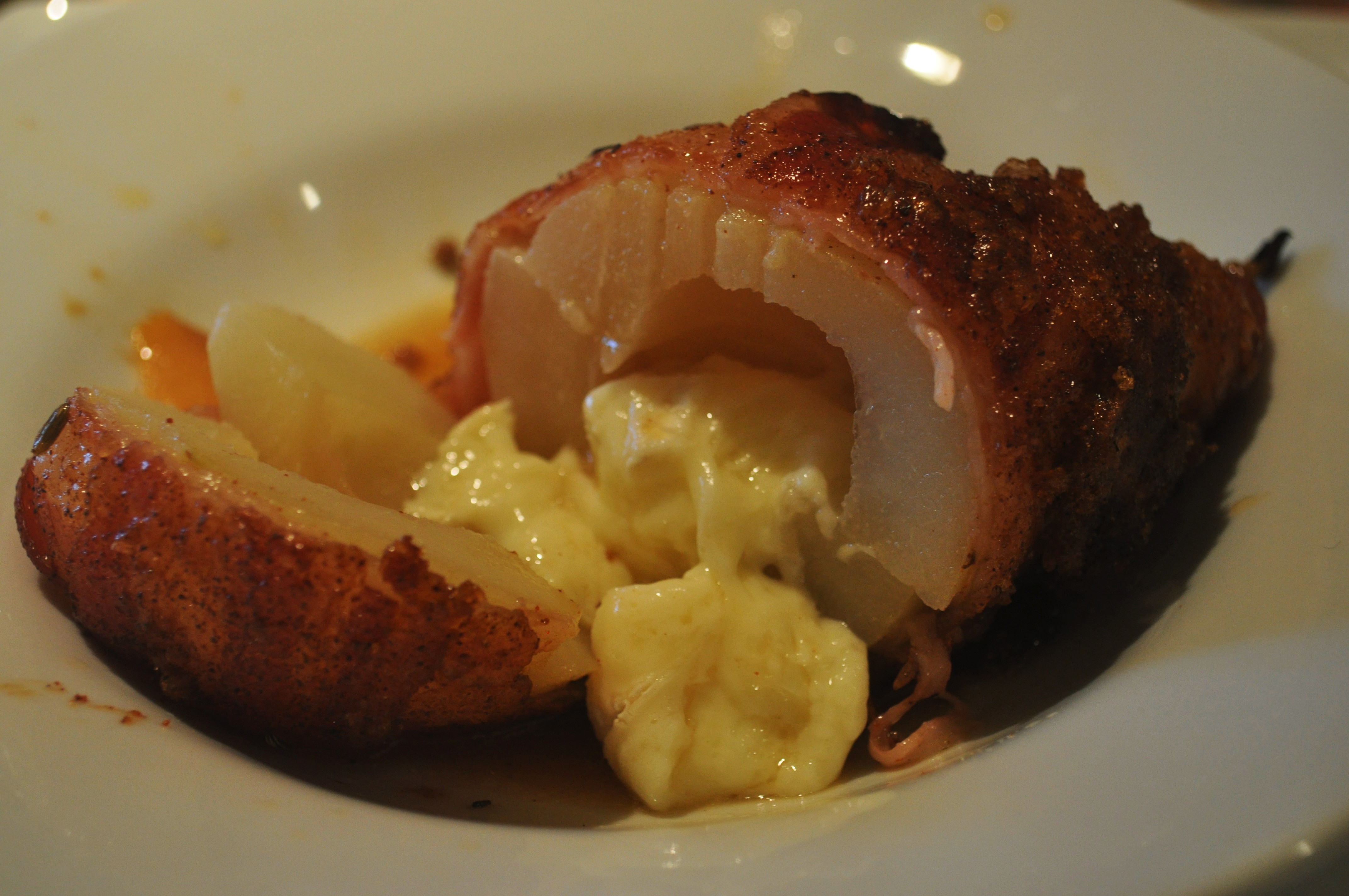
This recipe came about, as many do, with an inspiration from another cook. My friend Caterina Borg who has the fabulous food blog Good Food Gourmet. She made this post back in October about poached pears stuffed with Brie. She was inspired by another food blog Palachinka. Here is Palachinka’s original postwith a different spin on the theme. Palachinka’s post was inspired by a recipe in Sale&Pepe magazine, Serbian issue for December 2009.
I had planned to make this as an appetizer, but could not find small pears, so I made it as a first course, served in bowls with a reduction of the poaching liquid spooned over. This would also go great on some lightly dressed greens.
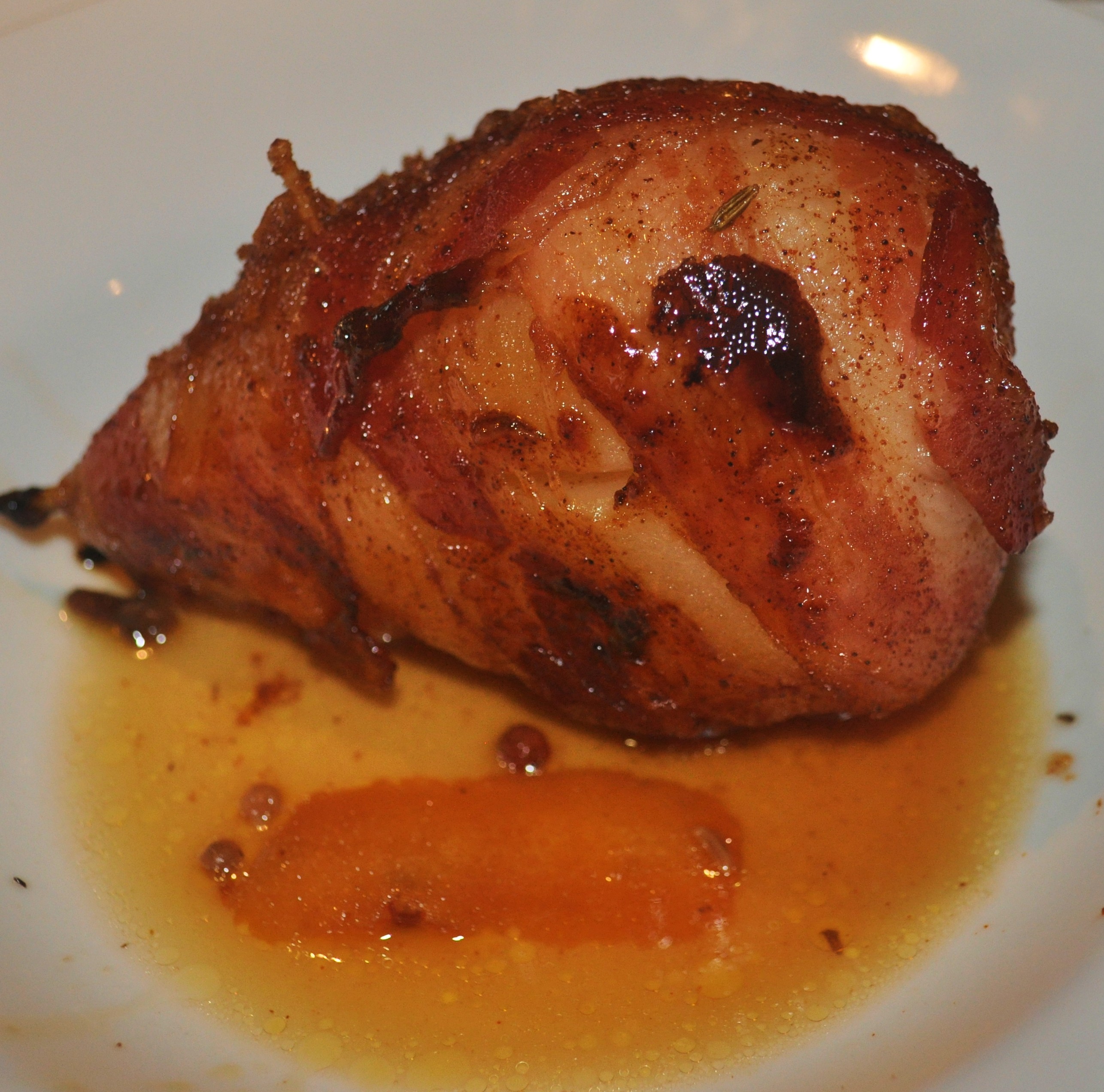
My spin was of course quite different, from the poaching liquid to the finish, and yet all three of our dishes have the same basic components, pears, cheese and bacon. What is not to love? Here is my version of the concept which dazzled my dinner guests last night:
Ingredients:
6 pears
Enough wine to cover 6 pears in a pot (2-3 bottles). I used prosecco, but you could use any wine you like. Port is great for this as would be a merlot. Each with their own distinctions.
Aromatics: I used fennel, pink pepper corns, thyme, cinnamon sticks, big slices of orange peel and cloves. Star anise would be nice this too.
A small wheel of Brie Cheese (You will have leftover cheese.)
12-14 slices of bacon
1 1 /2 cups brown sugar mixed with 2 teaspoons of Chipotle powder
Method:
Peel pears and place in a large pan so that they are in a single layer.
Cover with wine and add aromatics
Bring to a boil and then reduce heat and simmer for 15 minutes, remove pears to another bowl for cooling.
Turn the burner up to a rolling simmer and reduce the poaching liquid by half.
When pears are cool, cut in half, scoop out the center with a melon baller and fill the cavities with peeled brie, then put back together.
Wrap each pear with 2 slices of bacon, if you have a really large pear, you might need three slices. Hold together with toothpicks.
Roll the pears in the seasoned brown sugar
Place standing up on a silpat or parchment lined baking sheet and bake at 400 degrees for 15 minutes, or until the bacon is crispy.
Place each pear in a bowl, mine were laying down, but you could place them standing up too. Spoon the remaining poaching liquid with the aromatics over each pear. Serve with a sharp knife so the bacon is easily cut through.
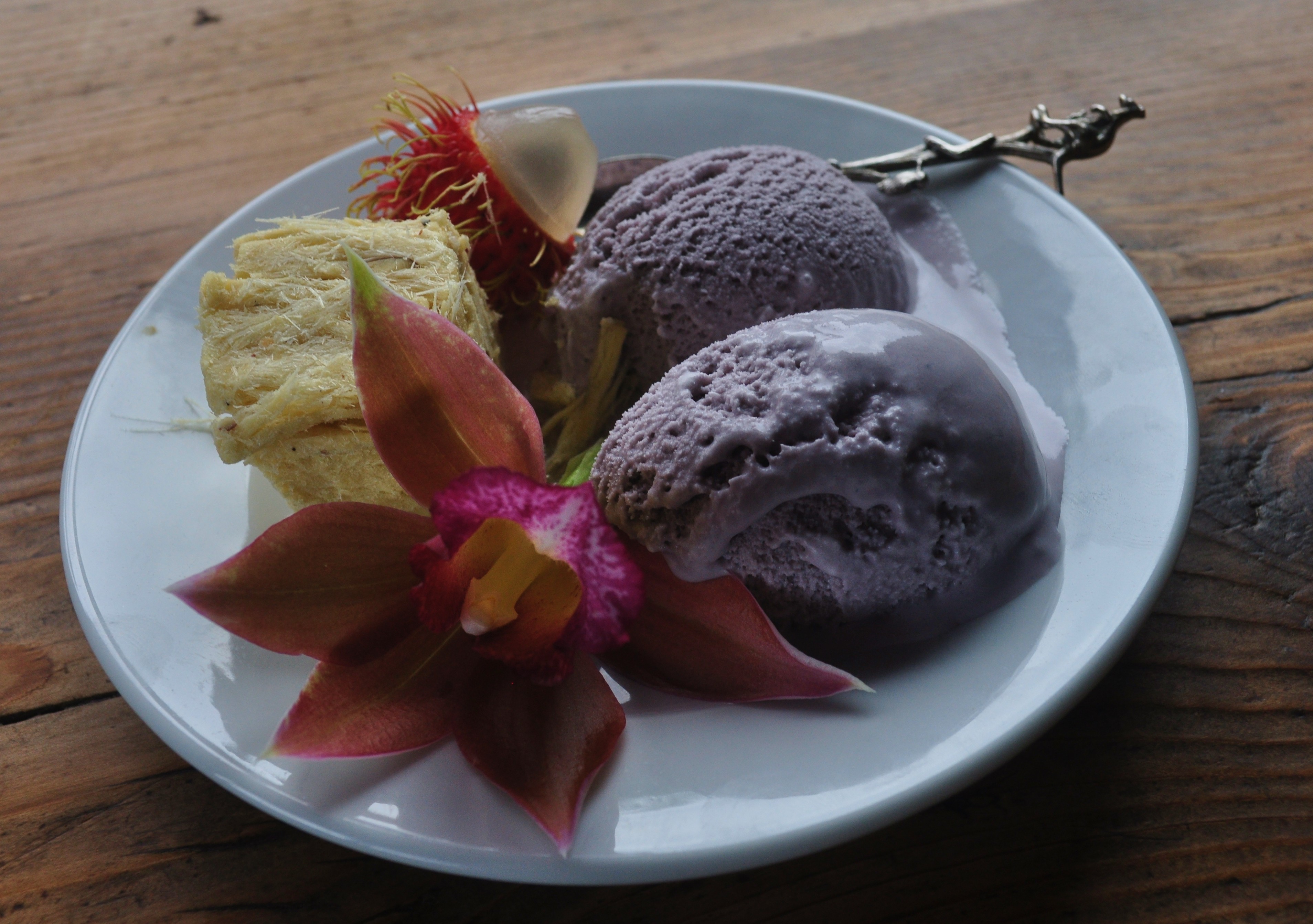
Gelato is ice cream’s smoother more flavorful Italian cousin. In Italy there are gelaterie shops everywhere. The trend came to the US several years ago, but there are still many people I meet that are not familiar with gelato. It is best made in small batches. It has less butterfat than most ice cream and there are a few secrets to making it smoother. Most recipes for gelato use only egg yolks, no whites. The yolk works as a stabilizer in the process. The other secret is to cook the custard and then after straining let it sit for for several hours after pasteurization is complete for the milk proteins to hydrate, or bind. This hydration reduces the size of the ice crystals, making a smoother texture in the final product.
I have an Italian gelato machine. But you do not have to have one to make good gelato. It does help if you have a machine which stirs while refrigerating, but you can still get good results with an old fashioned ice cream machine. My machine is made by Lusso and I call her Lucille.
Here is the recipe:
Ingredients:
2 cups whole milk
2 cups heavy cream
1/3 cup dried culinary lavender flowers
Zest of one lemon in large strips (use a vegetable peeler not a zester)
7 egg yolks
1 cup sugar
dash salt
1/2 teaspoon vanilla
Purple food coloring paste (buy this in cake decorating section of a craft store) optional
Method:
Bring milk, lemon zest and lavender almost to a boil
Turn off heat and allow to sit for 1 hour
Strain and discard lavender & lemon peel
Add cream with a whisk
Reheat strained milk & cream until bubbles form around edge of the pan
Beat the egg yolks with with sugar and a pinch of salt in a stainless steel bowl that will fit over a saucepan of water. Beat vigorously until the mixture is yellow and creamy (about 3 minutes)
Add a ladle of the hot milk/cream to the egg/sugar mixture and continue to whisk, then add the remaining milk/cream mixture very slowly
Maintain a simmer in the bottom of the double boiler, do not allow it to come to a rolling boil
Beat by hand or with a mixer while cooking for about 15 minutes, do not allow it to boil
When the back of a wooden spoon is coated with the mixture and you can draw a line with your finger it is ready.
Stir in the vanilla and pour through a strainer into another bowl that will fit into a larger bowl fitted with ice
Whisk in the coloring if you want to use it
Place plastic wrap over the entire top of the mixture, touching it all the way around. This creates a seal and will not allow a skin to form.
Place the bowl with the mixture in it into the bowl of ice and allow to rest until all of the ice melts.
At this point you can place it in the refrigerator to chill further, as long as over night.
Process according to your machine’s directions. Put into plastic containers and freeze or serve immediately
You might want to try one of my other favorite gelato recipes: Salted Caramel Gelato pictured below:
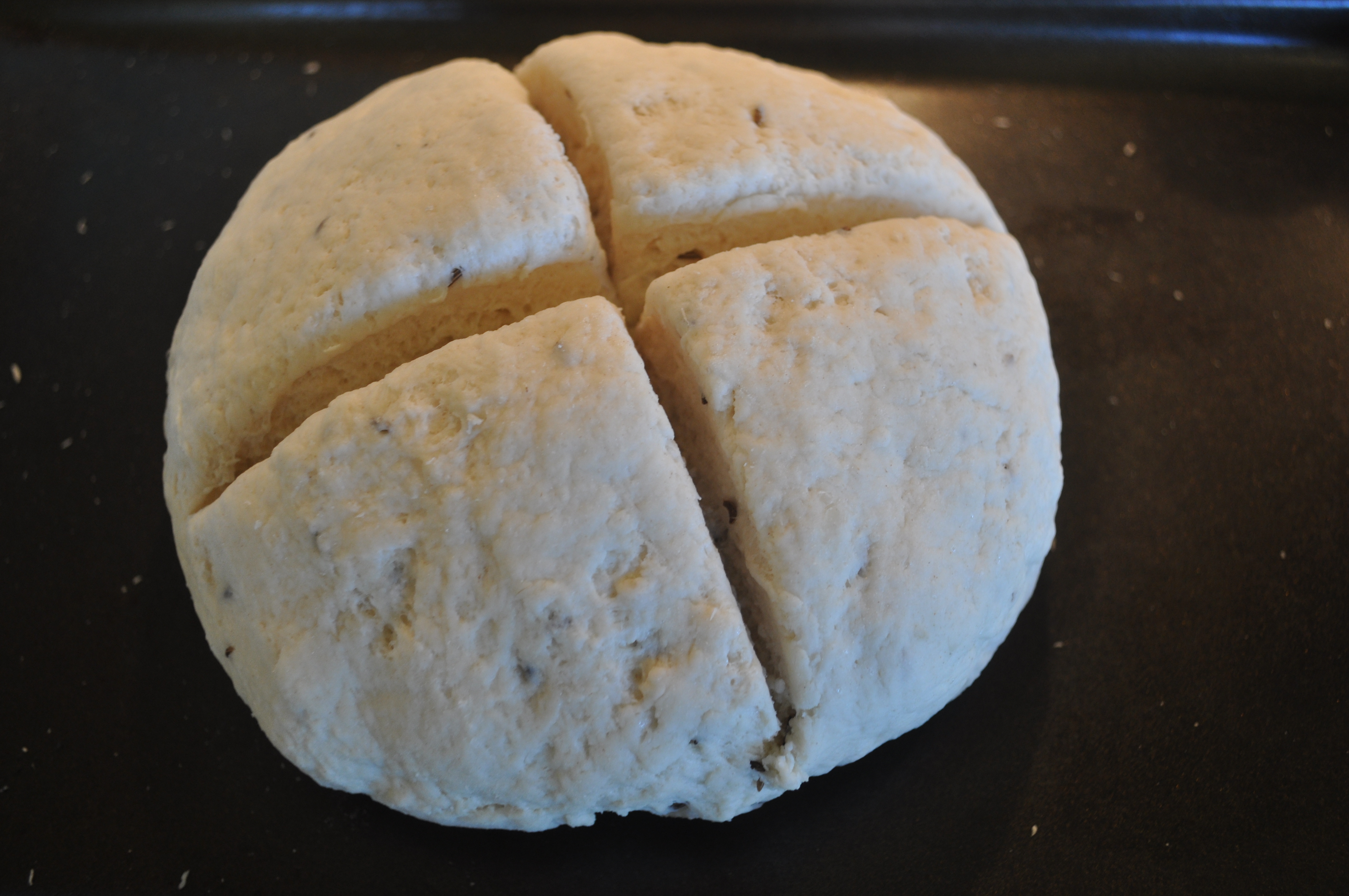
This bread pudding is a sort of a “two fer”, as it also includes a recipe for really great Irish Soda Bread. Soda Bread does not use yeast, it somewhat resembles a very large biscuit. It is easy to make and you will only use about half of the loaf for this recipe. Try toasting the leftovers with butter and jam.
It is March and we did an Irish Fine Dining Dinner for St. Patrick’s Day. I was not the host, so I only did three dishes, the first of which I am sharing with you today.
Ingredients:
For the Soda Bread:
2 Cups all-purpose flour + 2 tablespoons for dusting
1 teaspoon baking soda (be sure it is fresh)
½ teaspoon sea salt
½ teaspoon fresh cracked pepper
2 Tablespoons fresh dill chopped
1 tablespoon Caraway seeds
1 Cup of buttermilk (shake before pouring)
2 tablespoons unsalted butter, melted
For the Pudding:
4 large fresh eggs
2 cups whole milk
½ cup of heavy cream
½ teaspoon sea salt
½ teaspoon freshly ground pepper
2 cups grated Irish Cheddar Cheese
¼ cup grated Parmigiano-Reggiano
Paprika
6 6 ounce ramekins or a 2 quart baking dish
Method
FOR THE SODA BREAD:
Preheat oven to 350°
In a food processor add the flour, baking soda and salt. Pulse a few times. Add the caraway, pepper and dill, pulse a few more times. Add the buttermilk and butter. Pulse again till it just begins to form a ball.
Place on a lightly floured surface and gently knead into a smooth ball and flatten into a 6 inch flattened round. Allow to rest for 5 minutes. Place on an ungreased baking sheet.
With a very sharp knife, cut an X in the top of the dough about ½ inch deep. This assures even cooking.
Use a small sieve to dust the top with additional flour.
Bake on middle shelf (I also use a baking stone for even heat) for 35-40 minutes or until golden brown and a hollow sound is made when tapped.
Cool on a rack. This can be done one day ahead.
FOR THE PUDDINGS:
Preheat oven to 350°
Spray the ramekins with olive oil
Cut ½ of the bread into cubes and place them in the ramekins about half way up. Reserve remaining cubes.
Make the custard by whisking the eggs, milk, cream, salt & pepper. Stir in the cheeses. Pour into a pitcher.
Place the ramekins in a hotel pan or 9 X 13 baking dish, cover the bread with custard, making sure some cheese goes in. Then add additional cubes to the top of the ramekin 3/4 of the way from the top. Pour all of the mixture into the ramekins, filling them to the top. Sprinkle with a little paprika. Add about 2 inches of water to the hotel pan and bake 35-40 minutes. They are finished when a knife is inserted and comes out clean.
Remove from the water and place on a towel or rack and allow to rest for 15 minutes or more.
Involtini di Melanzane con Salsiccia e Mozzarella to be exact! I had two big eggplants, some spicy homemade Italian sausages and lots of great herbs and tomatoes. I sent a note to my friend and fellow blogger Peter Francis Battaglia (whom I also call Saint Peter sometimes) asking him if he had a good rollatini recipe that did not require ricotta. He sent me one via messages on Facebook and I made it last night. I even had some for breakfast. I served it on spaghetti that was simply tossed with butter, EVOO and some garlic. Here is the recipe pretty much as he sent it to me. I added just a couple of things in the mix. This is a recipe that can be made *creatively* and you can easily increase the amounts if you want to. I had a little extra filling left, so I just stuffed it in around…
These slightly sweet rolls are quick and easy to make. They freeze well and the dough can be saved in the refrigerator for up to a week so you can make them fresh for each meal. If you want a more traditional Hawaiian Sweet Bread Roll add another egg or two.
Ingredients:
2 (1/4 ounce) packages active dry yeast or about 1 tablespoon 1 cup lukewarm water (105 to 115 F)
1/4 cup canola oil
1 large egg
3/4 cup raw sugar or honey
1 1/2 cups warm water (more if needed)
6 1/2-7 cups bread flour
1 teaspoon sea salt
Extra Virgin Olive Oil
Butter
Method:
Dissolve the yeast in a large mixing bowl with 1 cup of lukewarm water and let it stand for about 5 minutes
Add the oil, egg, sugar or honey, salt and the rest of the water and mix it with a whisk, let stand again for a few minutes
Add the flour and mix on medium with a dough hook until the dough forms a ball. It should be a moist dough, but not very sticky. Add a little more flour if needed. Allow the dough to rest for 15 minutes then knead for 5 minutes
Put a small circle of olive oil in the bottom of a large bowl and put the ball of dough smooth side down into the bowl, then flip it over and cover with plastic wrap. And allow to rise for 90 minutes or until doubled
Pre-heat oven to 350 degrees Fahrenheit and get a large sheet pan spray with cooking spray or line with partchment paper or silicone mat
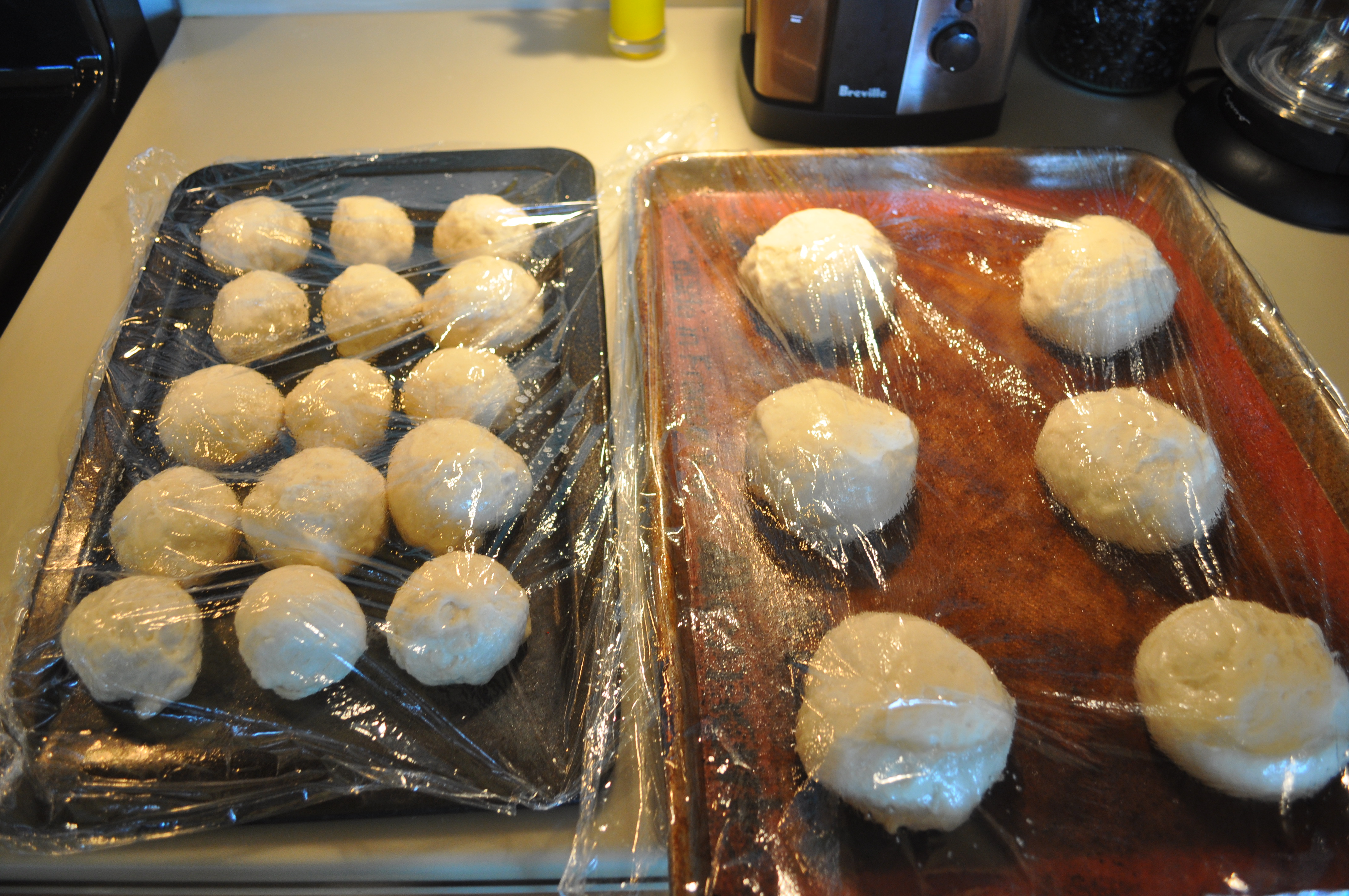
Punch down the dough and pinch off pieces of the dough and roll into golf ball size for dinner rolls or “slider” buns, or tennis ball sizes for sandwich rolls. Arrange the dough on the pan about 1-2 inches apart then cover with plastic wrap that has been sprayed with olive oil or Pam. Allow to rise for 20 minutes. The rolls will not quite double in bulk on the second rising
Bake rolls for 18 to 30 (shorter time for small rolls) mintues or until golden brown. When they come out of the oven brush lightly with olive oil or take a stick of butter and rub on the tops. You can also add seeds to the tops immediately after buttering. These can also be made into hot dog buns by making 4″ X 1 1/2 inch torpedo shapes and allowing to rise in the same manner. They make AWESOME hamburger buns too!
On Saturday I got to experience something really special. The Puna Hongwanji hosted a professional soba maker from Japan to teach a workshop on making soba. Mr. Yamaguchi came from Fukui Japan to teach us his craft. And I use the term teach loosely, as it takes an entire year of making soba three times a day before you can actually be considered a professional. In Japan, soba and other noodles are made both by hand and also by manufacturing equipment. The handmade noodles are revered and sought out. Mr. Yamaguchi’s shop is one where the noodles are made daily, every day of the week, every week of the year by his wife, himself and a worker. He and his wife take separate vacations so that the shop never closes. In the shop, the soba master works behind a glass cage so that the customers are assured they are getting the freshest handmade product. Often there will be a slightly misshapen piece of noodle added to each bowl so that the customers are once again assured of a completely handmade product.
Before you read further, here is the video:
The heart of soba making is in the region of Japan called Fukui where a long tradition of growing and harvesting buckwheat is centered. Buckwheat is not a grain, but the seed of a flower.
The 54 year old soba maestro has traveling equipment set up that he stores in Hawaii because he comes here so frequently to do demonstrations. His equipment involves a large wooden shallow bowl for mixing the buckwheat flour and water that comprise the noodle dough, a 3’ X 3’ rolling surface which comes apart in three pieces, a 3’ X 1’ cutting board with 2 little folding legs to hold it onto the rolling surface, preventing slipping, an interesting device that has a hand guard for cutting the noodles and a very large long steel cleaver that is used to precisely cut the noodles. His final 2 pieces of equipment are the rolling pins, two long dowels about 1 ½ inches in diameter and 3’ long. Each piece of his equipment has a handmade quilted bag to protect it when not in use.
Soba (そば or 蕎麦?) is the Japanese name for buckwheat. It is synonymous with a type of thin noodle made from buckwheat flour, and in Japan can refer to any thin noodle (in contrast to thick wheat noodles, known as udon). Soba noodles are served either chilled with a dipping sauce, or in hot broth as a noodle soup. It takes three months for buckwheat to be ready for harvest, so it can be harvested four times a year, mainly in spring, summer, and autumn. In Japan, buckwheat is produced mainly in Hokkaido. Soba that is made with newly-harvested buckwheat is called “shin-soba”. It is sweeter and more flavorful than regular soba.
Since soba also means “next to,” there is a unique Japanese custom called “hikkoshi-soba (moving-in noodles).” People who have just moved into a new neighborhood, give their new neighbors soba while introducing themselves.
On New Year’s Eve there is a custom to eat “toshikoshi-soba (year-crossing noodles).” Because soba is fine and long, people eat them to wish for a long life. This became widespread in the Edo period.
The style of Mr. Yamaguchi’s noodles is is Echizen oroshi soba, or Summer Noodles. They are served cold with bonito flakes, spring onions and a sauce made of freshly grated daikon that was mixed with seasoning. The cooking liquid is also served alongside as a tea. The seasoning for Echizen oroshi soba is usually made with soy sauce, mirin, water and sugar, but in this case because Mr. Yamaguchi believes that the daikon in Hawaii is sweeter than in Japan, he brought a bittering agent to counteract that sweetness.
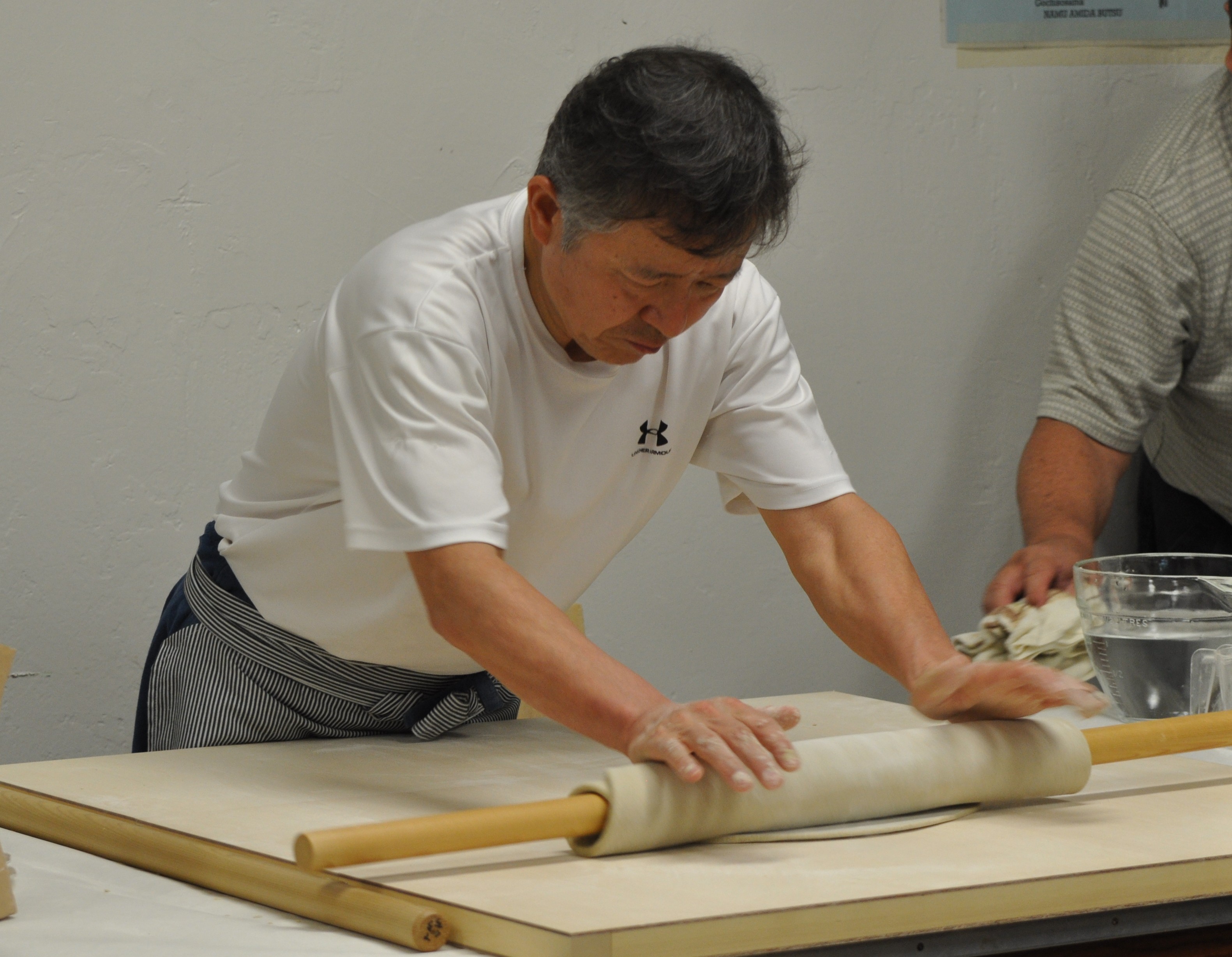
Mr. Yamaguchi does not speak English, so an interpreter from the Puna Hongwanji was available to translate his meticulous instructions. First the dough is made. This process takes about 30 minutes. Special flour made from the heart of the buckwheat is ground into flour. Mr. Yamaguchi brought his custom made flour in pre-measured bags. Each bag made one batch of soba. He had to make 3 batches to feed the 40 people attending the class. He starts by emptying the bag of soba flour into the bowl and adding a precise amount of water a tiny bit at a time. He works the dough by hand assuring that the hydration occurs evenly. As he incorporates more and more water, the dough begins to form and he kneads it over and over into a smooth and elastic dough. Finally after working the dough into complete submission, he flattens it into a disk and then starts the rolling process. The disc eventually is flattened and thinned into a square shape. This process takes another 20-30 minutes. The entire time my head was spinning as I was thinking how much easier it would be with a pasta machine to roll it out. Then when the dough is as thin as it needs to be, the square is folded over three times with extra flour to keep it from sticking and the cutting begins. The noodles are quite thin, thinner than the commercially made soba that I have experienced. Each bunch of noodles consists of 28 cuts. The noodles are then shaken to rid the excess flour and laid out on a sheet to rest. At this point you could cover the noodles and refrigerate for up to three days, but it is best to use them fresh.
A large wok-pot on a commercial wok burner was filled with water and set to boil. Once boiling the noodles are added and cooked using a long set of chopsticks to occasionally stir. In about 5 minutes a noodle is removed and tasted and when the noodles are at the ready they are placed into a colander and immediately dunked into ice water and “washed”. Then they go through the process a second time in fresh ice water. They are then immediately drained and served in bowls. The daikon in sauce goes on top, then some green onion slices and finally a generous hand full of bonito flakes.
A cup of soba noodles has 113 calories. That compares with about 200 calories for a cup of white-flour pasta. The calories in soba noodles still are made up mostly of carbohydrates, at 24.44 g. That compares to about 40g carbs in a cup of regular pasta. There are 5.77g protein in soba noodles and 0.11g fats. About 92 percent of the calories in the noodles come from carbs, 20 percent from protein and 1 percent from fat.
If your are interested in learning more about the Puna Honwanji, you can go to their website or facebook page.















 The Sassy Spoon: Fun Food!