Category Archives: Recipes

Tacos al Pastor

Standard

One of my all time favorite Mexican foods is a street food, Tacos al Pastor or literally “tacos de trompo” . It started in Puebla Mexico, where many middle eastern immigrants came and sold their own rotisserie meat, the doner kabob.  Now, all over Mexico they have stands where the pork and pineapple that have been marinating are stacked on a huge skewer and cooked in a vertical rotisserie and then the meat and pineapple is shaved off and served on a tortilla with onions, cojita and cilantro.

When I lived in Chicago I could just go to the Carceneria and buy however much I wanted of the velvety red marinated pork and pineapple and take it home and make the tacos straight away. Here in South Carolina it takes a little more work to produce the meal… but the results are outstanding. If you too like this dish, or want to try it, you can, no matter where you live. The first thing you will need is annatto, or if you live in a place with Hispanic groceries, you can buy the achiote paste commercially made. I have always been able to buy the paste, but here in Charleston…. no soap, so I learned to make my own.
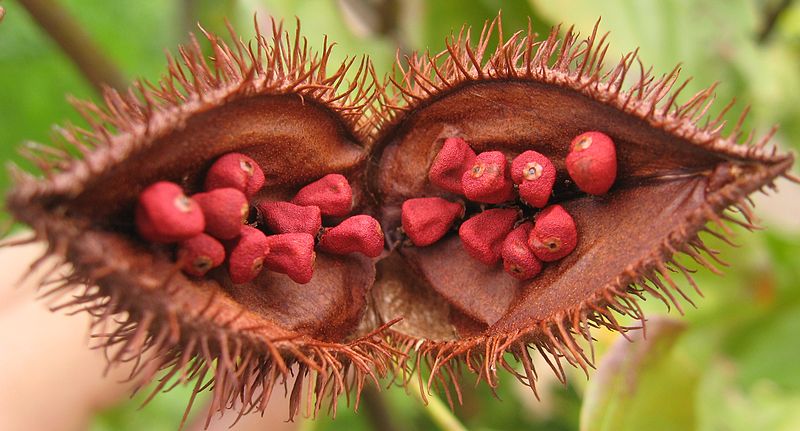
It is easy and I actually like it better than the commercial paste. I froze the extra paste in a ZipLock bag. Annatto is the seed of the achiote tree and is used in Hispanic & Caribbean cooking for color and flavor. I work at the Spice and Tea Exchange of Charleston and we sell annotto, so that was easy for me. If you cannot find it near you,  we also sell it on our website. Once you have the paste made, then you make the marinade. Because of  the pineapple juice in the marinade, you do not want the meat to marinate more than 4-6 hours. Then you cook the slices of meat and pineapple and serve them the same way I described above. I usually serve them with lime slices and sometimes crema (Mexican table cream).

Tacos Al Pastor

Ingredients:

  • 1 cup pineapple juice
  • 1/4 cup vegetable oil, plus more for cooking, or home rendered pork lard
  • One 1-ounce package achiote paste (or make your own, see recipe below)
  • 1 tablespoon adobo sauce
  • 4 chipotles in adobo sauce (you can also freeze what is left in the can for another time)
  • 6 cloves garlic
  • Pinch sea salt
  • 2 pounds boneless pork butt, sliced into 1/2-inch-thick slices, then into 1/2-inch-wide strips and then in 1/2 inch chunks
  • 12 fresh 6-inch white corn tortillas
  • 1 red onion, 1/4-inch dice
  • 1/2 a fresh pineapple, peeled, cored, 1/2-inch dice (0r you can use chunky canned pineapple)
  • 1/2 cup fresh cilantro leaves coarsely chopped
  • Cotija cheese, crumbled, for serving
  • Hot sauce, creama and lime quarters


Method:

Puree 3/4 cup of the pineapple juice, the vegetable oil or lard, achiote paste, adobo sauce, chipotles, garlic and salt in a food processor. Mix the pineapple juice mixture with the pork in a freezer bag and move around to coat. Marinate the pork in the fridge, 1 to 3 hours.

Preheat a cast-iron skillet or grill to medium-high heat. *Note: if you are doing this on a grill, leave the meat in strips and then chop after cooking. Lightly oil the skillet and add the tortillas, toasting, about 30 seconds per side. Remove the tortillas and store in a towel to keep warm.

Raise the heat under the skillet to high and add 1 tablespoon vegetable oil or lard. Remove the pork from the bag and wipe off any excess pineapple juice mixture. Cook the pork in batches, until charred and cooked through.

Remove the pork from the skillet. Add half of the onions and the fresh pineapple and quickly cook until lightly browned, about 2 minutes. Add the remaining 1/4 cup pineapple juice and the chopped pork back to the skillet with the juices.

Place the pork, pineapple and onion mixture in the tortillas. Top with the remaining onions, cilantro, cotija and hot sauce.

Home made Achiote Paste

Ingredients

    • 6 tablespoons annatto seeds
    • 1 tablespoon toasted cumin seeds
    • 1 tablespoon toasted coriander seeds
    • 1 tablespoon toasted black pepper corns
    • 5 allspice berries (these can also be toasted)
    • 1 teaspoon sea salt (I use smoked salt)
    • A pinch of nutmeg
    • 6  whole cloves
    • 6 garlic cloves
    • Juice & zest of 3 limes or lemons
    • Enough olive oil to make the paste (about 1/4 cup)

Directions

  1. Put all spices and dry ingredients into a spice grinder, and grind until you have a fine powder.
  2. Take the powder and put it into the  bowl of a food processor and add the garlic, lemon juice, zest and the olive oil 1 tablespoon at a time until you get a thick paste which binds together, in a putty like consistency.
  3. Separate into Tablespoon size portions and freeze individually.
  4. When you want to use it, you can mix the TB size portion with 10 cloves of garlic crushed, and 1/2 cup of 50/50 orange juice & lemon juice and marinate pork or chicken overnight.
  5. Some recipes say to add tequila, but that is an Americanization of this Yucatecan specialty. However, I have done it and it is good.

*NOTE* Annato seeds are very, very hard, and are difficult to grind with a mortar and pestle, use the grinder or it won’t make a paste. They DO, and WILL stain your grinder, and anything you happen to spill it on, be careful. You can double, or multiply this recipe as you wish, and I usually make enough for a year’s worth at a time. It freezes well.

Pesto: Summer’s Gift

Standard

There are few things that can compare to home made pesto. It evokes the essence of the garden, all of that basil and garlic… but it also has a richness and depth because of very good olive oil, lots of Parmigiano Reggiano and most importantly pine nuts and pistachios! As my basil plants dictate (it takes ARMFULLS of basil), I make a big batch and freeze it. It does keep well in the refrigerator too, at least 6 weeks.  I never use a recipe, but I paid attention this time to the amounts so you too could make some of the best “green sauce” in the world. If you have a smaller amount of basil, you can divide this recipe. Just remember to taste the pesto for balance and seasonings. It should have a little tang to it and also be rich and slightly crunchy. Some people use other nuts, such as walnuts, but I promise nothing can compare with the combination of pine nuts and pistachios. The are expensive, but really worth it in this instance. And a little pesto can go a long way too! 

Ingredients:  

1 1/2 cups pine nuts

1 1/2 cups pistachios

16 cups of basil leaves and flowers if you have them. I sometimes add parsley and arugula to the mix, but the predominate flavor needs to be basil. 

Zest and juice of three large lemons

3 heads (not teeth, full heads) of garlic, skinned and cut into chunks

1 1/2 -2 cups of good olive oil you judge when the consistency is ideal

2 tablespoons smoked sea salt (non smoked is fine too)

3 tablespoons fresh cracked pepper

1 tablespoon raw sugar

1-2 tablespoons crushed red pepper

3 cups freshly grated Parmigiano Reggiano (you can do this in the food processor ahead)


You will need a food processor for this. If you do not have one, a blender works, but you will have to do it in smaller batches. I have a very large Cusinart, so I do a big batch at one time. 

Method: 

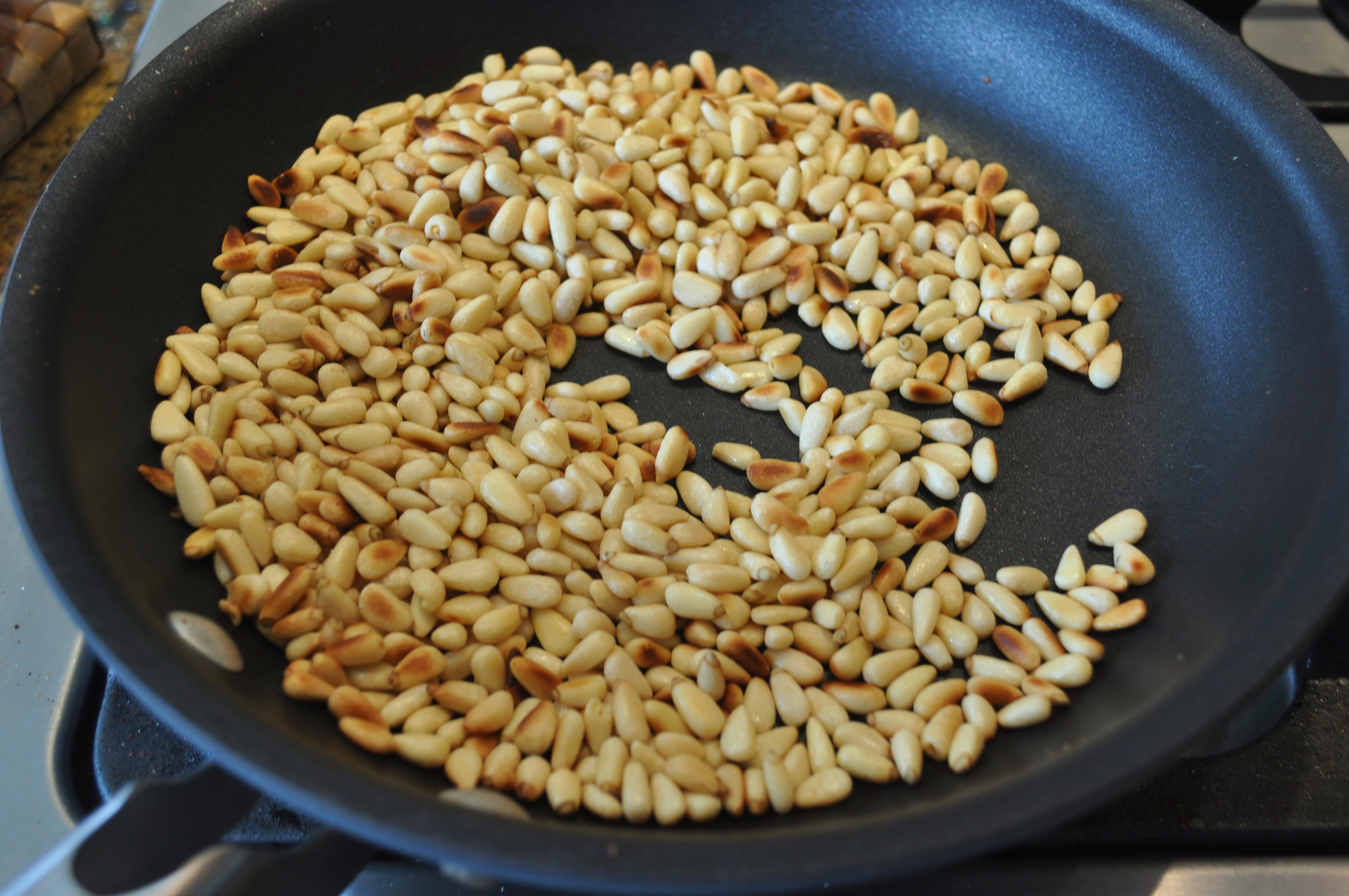
Get all ingredients in place. Toast the nuts in a dry skillet. Do not crowd them too much. I did two batches for this recipe. 

While the nuts are cooling, fill the processor bowl with basil, slightly packed, but not too tight. You should have some basil left over, this will go in after the first part is ground. 

Add the salt, pepper, red pepper, 1 cup of olive oil, garlic, all of the lemon zest and juice. Pulse till the basil is reduced in volume, add the rest of the basil and more oil. The oil and the lemon juice allow the basil to be ground down into a paste. The lemon juice is used for flavor, but also to keep the pesto bright green. Add all of the nuts and process again, adding olive oil as needed to make the paste. Add the cheese and more olive oil as needed. It should be a thick paste, but one that easily drops from a spoon. Once you have it all ground up, taste, add more seasoning if you need it. 

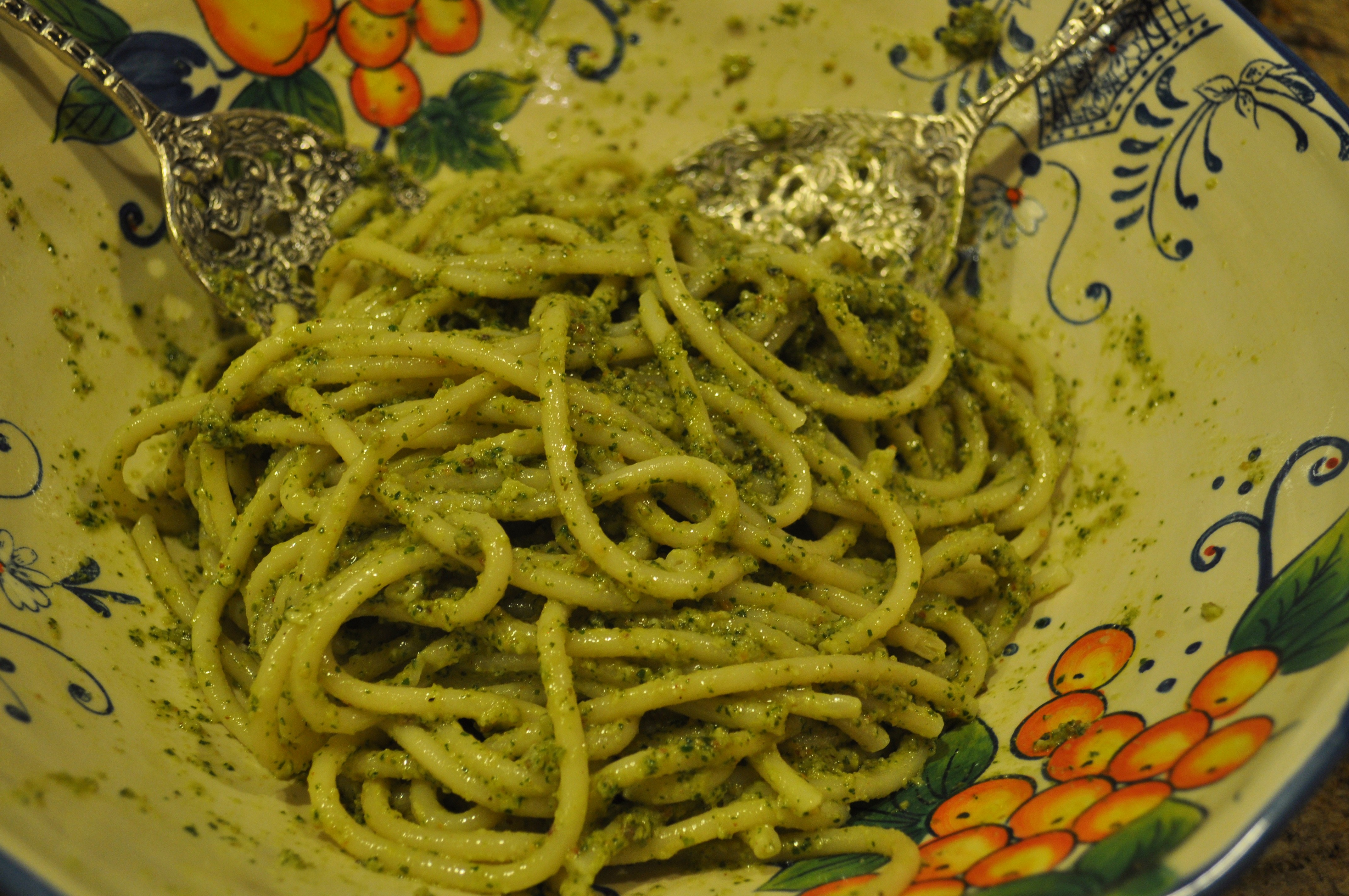
Freeze in containers the size that you are likely to be using it. I find that about 1 cup servings are good for two people. This is great on pasta, pizza, fresh mozzarella, ricotta, crostini, chicken, steak and even on scrambled eggs.  I also like to dip bread sticks in it. However, my favorite way to eat it is over pasta. 

Trip to Indonesia with Shrimp Sate and Peanut Sauce

Standard


Several years ago we were aboard a boat off the shore of Bonaire, a Dutch Territory off of the coast of Venezuela. The island has a huge Indonesian influence because the Dutch once held Indonesia as a colony. We were served this tasty sate and the owner of the boat gave me her simple recipe. It is very easy to make. We had some interesting meals in Bonaire, including Iguana Stew, but I did not ask for that recipe. Sate can be made with pork, chicken, beef or seafood. It is basically slices or in this case, whole shrimp that is marinated in a lemon  & sweet soy marinade, then grilled and served with a peanut sauce. The peanut sauce is delicious on rice or other dishes too. I served  the Shrimp Sate with a cucumber salad and fried rice.

Sate with Peanut Sauce

Yield: 6 appetizer Servings or two entree servings

MEAT
1 1/2 lb Pork, chicken tenders or steak cut into ½ inch strips, 1 pound of fresh shrimp  or for vegetarians use extra firm tofu

MARINADE
2 ea Lemons
2 ea Garlic cloves, diced
4 tb Indonesian soy sauce (this is sweet soy sauce, slightly heavier than regular soy sauce).

PEANUT  SAUCE
4 tb Peanut butter
1 tb Lemon juice
1/2 c Honey
1/2 ts Hot red sauce  (Sambal Orelek or “Rooster Sauce”)
1/4 c Half and half or Coconut Milk (unsweetened)

6 leaves of Kafir Lime slivered and chopped.


Cut chicken meat into strips or peel shrimp. Make marinade by combining juice from lemons with garlic, soy sauce and salt. Pierce meats and marinate 2 to 4 hours. Save the marinade to use in the peanut sauce. Weave meats onto skewers and broil or barbecue until meat is done. Do not overcook.

To prepare the peanut sauce, combine peanut butter, lemon juice, honey and hot sauce with reserved marinade, and heat at low temperature until well blended, stirring constantly. Remove from heat and add half and half. Return sauce to heat and warm through, stirring constantly.

Serve the skewers on platter and pour sauce into bowl. Meat is dipped in the sauce as you eat.

The Ultimate Maraschino Cherry: Homemade!

Standard

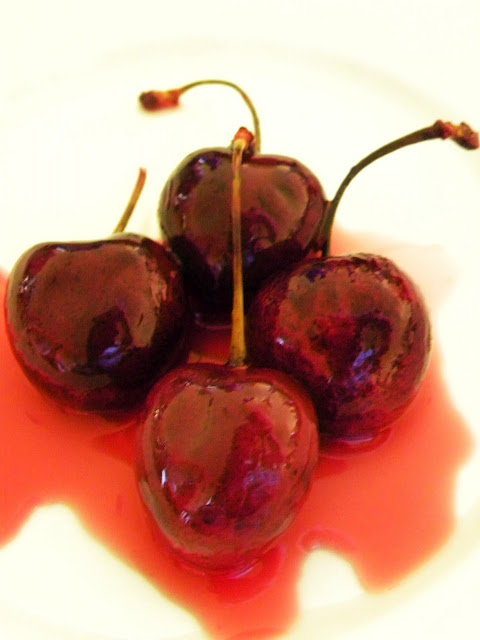
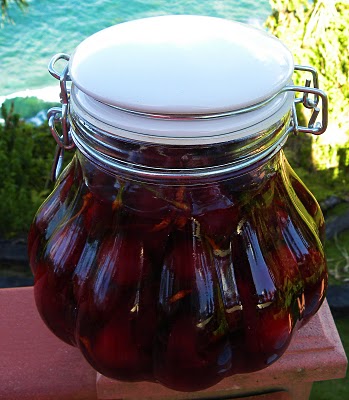
I am tired of ingesting sappy sweet Maraschino Cherries loaded with red dye #40. I want some *real cherries* for my manhattans and Mai Tais! And so, I made Homemade Maraschino Cherries. There are two ways to make them (that I know of) and one of them requires sourcing  Luxardo Maraschino Liqueur .I will be posting about those soon.  If you are not looking for a spiked cherry, why not just make them the old fashioned way? Basically this involves taking fresh cherries at their peak, creating a syrup adding some spices and flavors that will compliment the cherries, then simmering the cherries lightly in the syrup without really cooking them completely. This enables the flavors of the syrup to penetrate the cherries and still retains the texture of a fresh cherry.

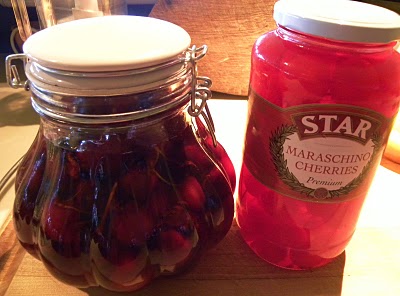
Which would you rather have?

Commercial Maraschino Cherries are typically made from light-colored sweet cherries such as the Royal AnnRainier, or Gold varieties. In their modern form, the cherries are first preserved in a brine solution usually containing sulfur dioxide and calcium chloride to bleach the fruit, then soaked in asuspension of food coloring (common red food dye, FD&C Red 40), sugar syrup, and other components. Green maraschino cherries use a mint flavoring.

This recipe is simple and can be completed in the space of an hour. When the cherries have been soaking in the syrup even longer, they will be even tastier. I did not pit the cherries and I left the stems in tact, but you can pit them if you want to. You will need a large jar or container to store the cherries in. They do need to be refrigerated. The alternative of course is to process the cherries, but then they would lose so much of their fresh taste and texture.

These cherries are not just good… they are DAMN GOOD! Try it, really, it is so worth it!

Home Made Maraschino Cherries

2 cups pomegranate juice (use 100 percent juice)
1 cup sugar
3 1/2 ounces fresh lemon juice (from approximately 3 lemons)
Pinch of salt
3 whole pieces star anise
8 whole cloves
1 pound sweet cherries
1 teaspoon almond extract
In a nonreactive saucepan, add juice, sugar, lemon juice, salt, cloves and star anise. Place over medium-high heat and bring to a boil. Reduce the heat and simmer the mixture until the sugar has dissolved.
Add the cherries and almond extract. Simmer on low heat for 10 minutes or until the cherries have exuded some of their juice and the syrup has taken on a distinctly cherry flavor. Be careful not to overcook. The point is not to actually cook the cherries, but to heat them in the syrup just long enough to bring out their essence.
Remove the pan from the heat, transfer the cherries and the syrup to a bowl a container with a tight-fitting lid, cover tightly, and refrigerate. The longer the cherries steep, the more flavorful they will become.
The Ultimate Manhattan:
I had my first Manhattan at the bar of Tavern on the Green (which incidentally went from being the nations second highest grossing restaurant in 2007, to closing due to bankruptcy in 2009) on my inagural  trip to New York in 1997. I ‘ve loved them ever since. I have returned to Manhattan several times since then, both in my heart and in person, I always order Manhattans when I am there.  It’s a sophisticated, strong and simple cocktail, and the ultimate showcase for as many maraschino cherries as you care to pack into your glass. The proportions are 2:1 
Makes 1 drink
3 ounces whiskey, rye or Bourbon
1 1/2 ounces sweet vermouth
2-3 dashes Angostura bitters
Maraschino cherries, for garnish
In a double old fashioned glass, add the whiskey, vermouth and bitters, stir. Garnish with maraschino cherries and serve on the rocks. The drink can also be served straight up by using a cocktail shaker and straining into a martini glass.

Jalapeno Martini: A Sassy Cocktail

Standard

One of my favorite cocktails is the Jalapeno Martini. I first had one at Hilo Bay Cafe when living in Hawaii. It was not at all difficult to figure out the recipe for this really refreshing drink. I am not truly much of  a martini drinker, but I do love all things jalapeno. Here is the recipe for you to try.

Ingredients: 

2 jiggers of good vodka

2 drops of dry vermouth

1/2 a jigger of juice from pickled jalapenos (save those peppers to add to cornbread or use in recipes)

1 large Gorgonzola stuffed olive ( I make my own, just find nice big olives and remove the pimento)

Method: 

Fill a martini glass with ice to chill it while making the drink

Put the vodka, vermouth and jalapeno juice in a shaker with ice and shake about 20 times.

Remove the ice from the martini glass, strain the martini into it and garnish with the olive. So good and so easy!

Most WONDERFUL Crispy Okra and Curry Leaf Raita

Standard

My friend Ruta Says: “Odly enough, children in India love okra. But it’s hardly surprising; whether sautéed, fried or stuffed, the vegetable is prepared in a way that makes it’s texture pleasing rather than gooey. In this recipe, for instance, the okra becomes crunchy and addictive on it’s own; stirred into spiced yogurt, it is even better. This can be eaten on it’s own, or served with thalipeeth.”
Ruta wrote the book  5 Spices 50 Recipes, a wonderful play on Indian cooking that makes delicious Indian food accessable for every home cook. Several years ago I was invited to a press dinner at her home in Berkeley, California where we cooked and ate a most amazing meal. I have only changed the recipe slightly, adding a bit more mustard seed and added flavor and crunch of curry leaves. They may be hard for you to come by, but they are available at most Indo/Paki grocery stores. I grow my own. If you cannot find them, the dish is still quite good without them, but even better with them. The flavors and textures in this Raita make my mouth sing. You will want to double the ingredients after you have made this once, it is highly addictive.

Ruta has a new book out now, Quick Fix Indian. There are also rumors that she is planning on a restaurant in Goa where she spends some of her time.

 Ingredients: 

8 ounces fresh or frozen, cut okra

3-4 stems of curry leaf, leaves pulled off of the stems.

6 tablespoons canola oil, divided

1 cup plain whole or low fat yogurt

¾ to 1 teaspoon salt (I used my smoked salt for this)

½ teaspoon sugar or jaggery grated

1/8 teaspoon cayenne (or more if you like a real kick)

1/4 teaspoon ground turmeric (so good for you)

2 teaspoons mustard seeds (I use half golden and half black)

Method:

Wash the okra and towel dry each one thoroughly. Slice into ¼ inch-thick rounds. If using frozen okra, do not thaw.

Heat 5 tablespoons of the oil in a large skillet over medium heat. When the oil is very hot, add the okra, toss and let sizzle. Toss occasionally. The okra will slowly crisp and turn brown. Note: frozen okra may not crisp as well, this is OK, just be sure to brown it well. Once all of the okra is well browned, remove to a paper towel lined platter and set aside till ready to serve. Repeat with the curry leaves. They crisp up really quickly, so keep your eye on them.

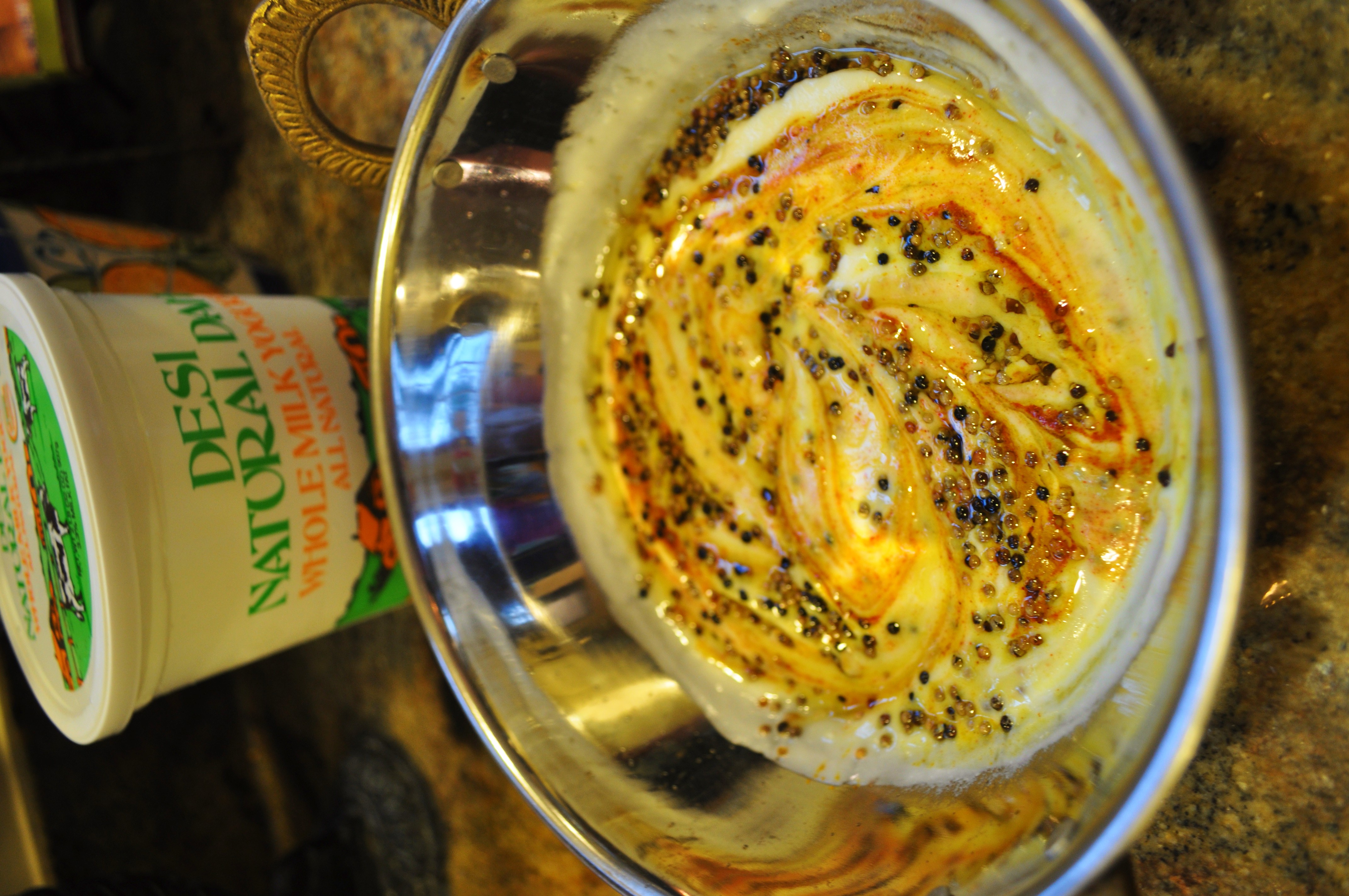
Make the tadka: Whisk the yogurt with the salt (to taste) and sugar place the cayenne and tumeric in a small pile on the raita, but do not stir in yet. Heat the remaining tablespoon of oil in a butter warmer or small skillet over high heat. When the oil begins to smoke, add the mustard seeds, covering th pan with a lid or spatter screen. After the mustard seeds stop sputtering, pour the hot oil directly on top of the cayenne and turmeric powder. This cooks the powdered spices without burning them. Do not stir the dressing in yet.

For presentation prior to serving, place the crisp okra & curry leaves on top of the dressing. Stir the okra and dressing into the yogurt while serving. I promise you will be licking the bowl in before the night is over.

Serves 2-4


Best Fried Chicken EVER: French Laundry Style

Standard

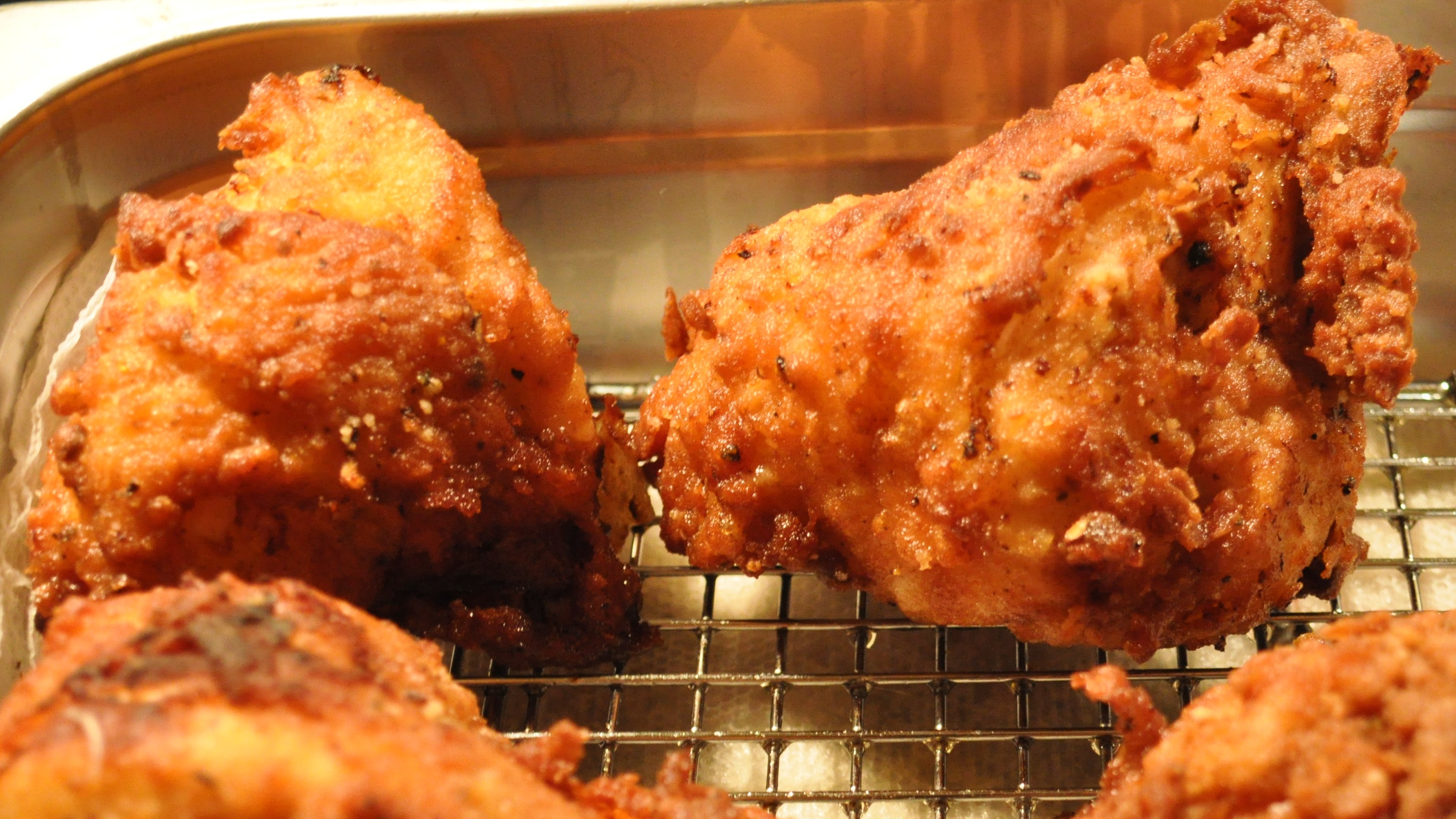
This is the first fried chicken I have had since moving to Charleston. Nothing says the south quite like fried chicken with mashed potatoes and gravy. Thomas Keller of the French Laundry  fame serves this chicken at Ad Hoc every Tuesday. This is quite simply the best fried chicken ever. I have tweaked it a bit from the original recipe after making it a few times. Less bay leaves, added peppers, fresh turmeric, honey in the buttermilk and some other changes. The brine maintains texture and flavors the chicken. It is delicious hot or cold. The buttermilk and honey impart a tang and sweetness. The coating fries perfectly if you maintain the temperature of the oil.
You need to start this ahead of time, it takes two days to make. The first 24 hours is brining in the refrigerator, but the active time for frying the chicken is no longer than any other recipe of fried chicken.
In my house it is for special occasions, as each piece is about 500-700 calories depending on if you eat the skin (and WHY wouldn’t you?).

For the Brine:

1 gallon water
1c kosher salt
1/2cup of honey
1/2 cup raw sugar
2 bay leaves
2 heads of garlic cut in half
¼ cup yellow mustard seeds
1 finger of fresh turmeric grated (2 Tablespoons of ground turmeric if you cannot find fresh)
1 small hand full of whole black peppercorns
2 large stalks of lemon grass bruised
5 large rosemary sprigs
1 bunch thyme
1 bunch parsley
Zest, juice and rind of 3 Meyer lemons
5 habanero chiles cut in half
4-6 # of chicken parts (Split breasts are quite large these days, so if you find yours extra large, use a cleaver and cut each breast in half)

For Frying:
6c flour
3T garlic salt
5T onion powder
2 T paprika
4t cayenne
1T fresh black pepper
2t kosher salt (I use smoked Hawaiian salt)
6c buttermilk
1/2 cup of honey
12c peanut oil (or freshly rendered lard)

Method:

Place all of the brine ingredients in a large pot and heat till the sugar and honey melt. Remove from stove and allow to cool. To speed this process up, you can use ¾ gallon of water and then add 4 cups of ice cubes after cooking.
When completely cool add chicken parts. Refrigerate for 12-24 hours.
Mix together the honey and buttermilk.
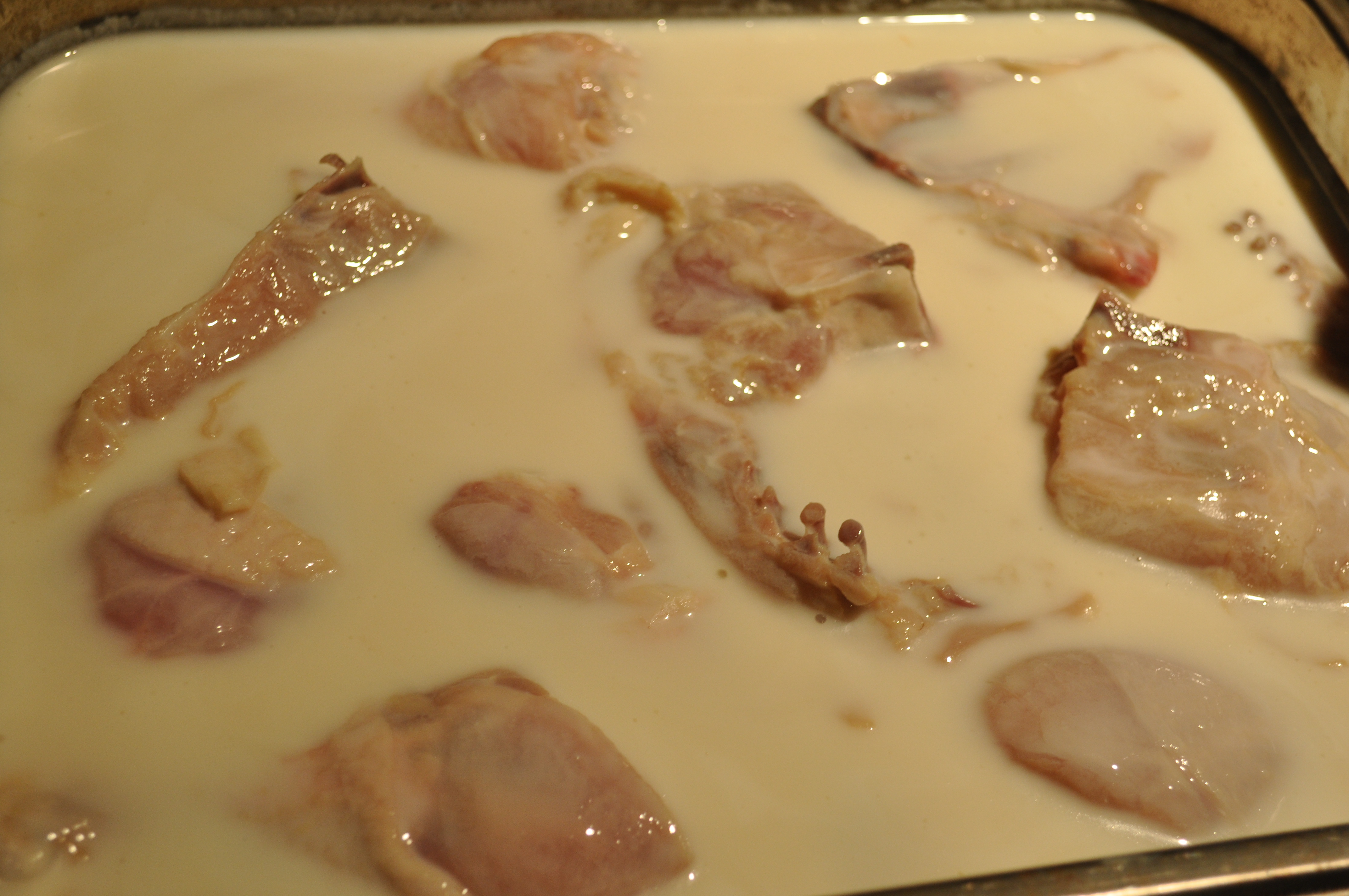
Buttermilk Bath
Remove the chicken from the brine and pat dry with paper towels
Add to the honey and buttermilk and allow to soak for at least one hour and up to 12 hours.
Heat the oil/lard in a very large deep pot to 300˚, try to maintain this heat during cooking, do not let the oil get too hot.
Mix together the flour and seasonings in a large pan.
One piece at a time, take each chicken piece out of the buttermilk mixture, coat with flour, shake off excess and then dunk again in the buttermilk and coat again in flour.

Set the chicken pieces on a large baking sheet lined with waxed paper. Allow the chicken to sit at room temperature for 30 minutes to one hour.

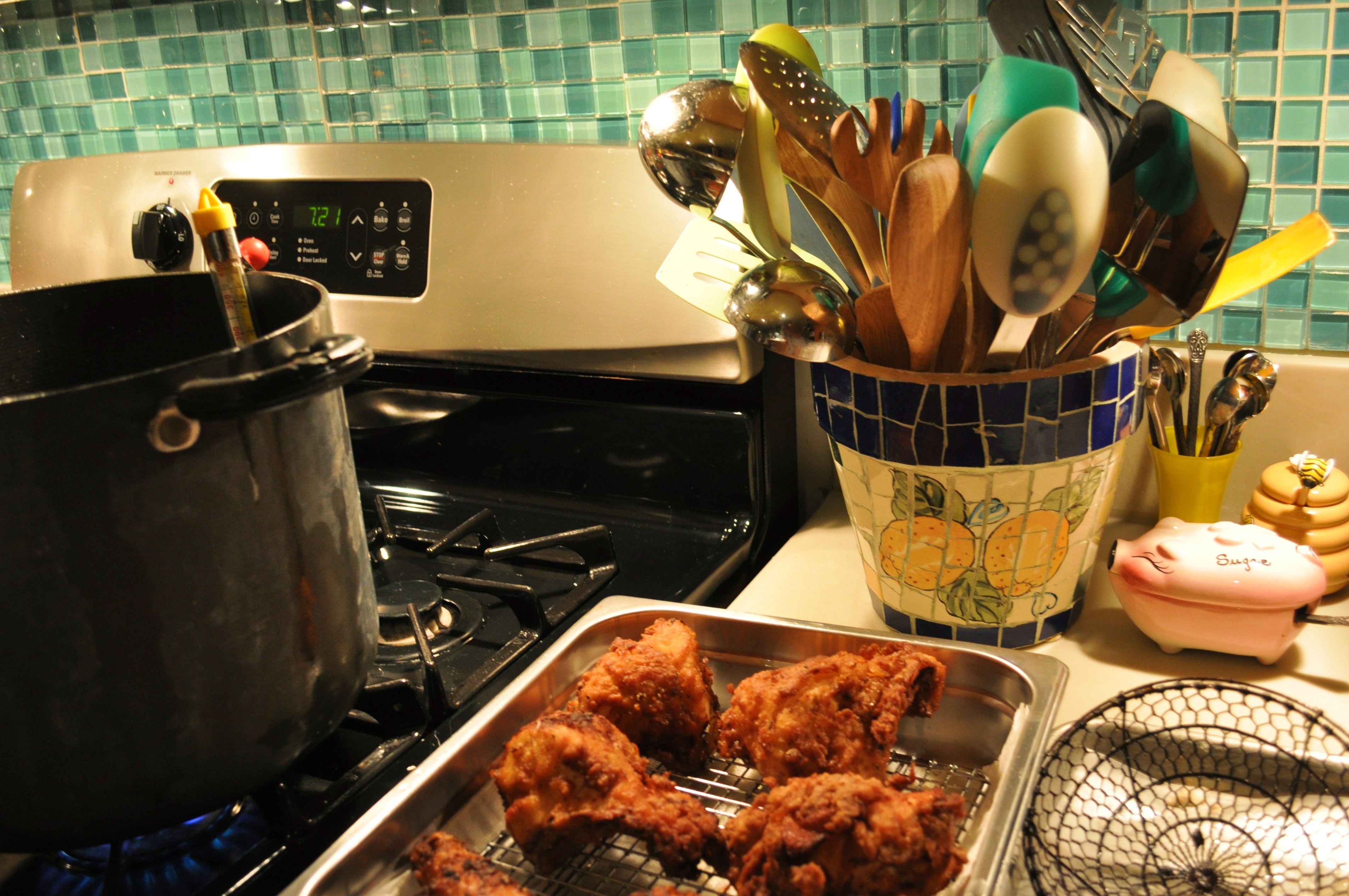
Start frying, two to three pieces at a time, do not crowd the chicken. It would be even better to do it one piece at a time so the oil maintains the 300˚ temperature, but that is time consuming. Use a candy thermometer to maintain the temperature as close to 300˚ as possible. When the chicken is golden brown (about 12 minutes for legs and thighs, 7 minutes for ½ breasts) use an instant read thermometer to check doneness. It should read 160 ˚. Remove and place on a sheet pan in a warming oven no warmer than 120 degrees.


Serve while warm.

Making Perfect Potato Chips; Bet you can’t eat just one!

Standard


Somethings are so simple and yet we don’t often take time to make them. Potato Chips are one of those things. Sunday morning I decided to do BLT sandwiches for brunch. I thought about making hash browns or fried potatoes as a side and then suddenly a light bulb came on , Potato Chips! Having  just moved, I had already unpacked the necessary tools. I had the big pot of peanut oil, the mandoline and some potatoes. I had some of what I call “Devany Seasoning.” It is an all purpose flavor enhancer with smoked salt, smoked paprika, pepper, a bit of sugar and whatever spices I am cleaning out when I make it. This is so simple, I can hardly call it a recipe, it is much more of a method. There are just a few hints as to how to do this. First I put the bacon in the oven so it would be ready for the sandwiches when the chips were finished frying.

Mise en place for BLT

As in all cooking, get everything out that you will need, Mise en place is the culinary term for having every thing ready and in place before you start preparing a meal. It is probably the single most important thing you can do when preparing a dish. We can probably thank Escoffier for this, as he was famous for running an efficient kitchen. Once everything is set   in place, start cooking.

Ingredients: 

Russet Potatoes, washed well. I leave the skins on. You will be cutting these paper thin, you may as well skip the peeling and go for the nutrition that is in the skin. You can also do this with other root vegetables such as  sweet potatoes, taro and even carrots.

Peanut or Canola oil in a large deep pot or fryer. Peanut oil has a high burning point and is great for frying. You can find it for a really good price in stores that sell turkey fryers.

Seasoning. You can use sea salt, BBQ seasoning or other flavors. Next time I am using truffle salt.

Equipment: 

You will need a mandoline to cut the chips into very thin slices. It can be done with a knife, but it is doubtful that you will be able to consistently cut uniform paper thin slices. If you do not already own a mandoline, there are many inexpensive models available.

If you do not own a deep fryer, you will need a large deep pot. This prevents splattering.

You will also need a rack to drain the chips on. I use a steam table pan and rack, but you can use a sheet pan with a cookie rack. If you do not have a rack, you can use paper towels, but do change them out as they get drenched with oil.

A fat thermometer is quite helpful. This looks like other instant read thermometers, but it has a very long probe and can be attached to the side of the pan. This is a tool that is helpful for making jams, candy & cheese. I use mine a lot. You need to maintain a consistent heat of 350 degrees. If you do not have one of these, you can eyeball it, but you will have much better success if you use a thermometer.

A spider to remove the chips from the oil.

Method: 

Pre-heat the oil to 350 and then turn the heat down slightly to maintain that temperature.

Using the mandoline on the thinnest setting possible, evenly slice the potatoes, one at a time. One potato will take 4-5 frying sessions. You do not want to crowd them.

In batches, gently drop the slices , one at a time into the oil. Turn them using the spider and separate any that are touching each other. Note, these cook very fast, you must give them your full attention while frying.

Place the chips on the draining rack and IMMEDIATELY season. Doing the seasoning immediately will make it adhere better.

Once the chips have cooled slightly they can be placed in a bowl. If you are making them ahead of use,  wait till all are completely cool and then place them in an airtight container. They never last very long at our house, but they do keep well for several days if you need to do them in advance.

Home made fries with a BLT. Mr. Garlic approves

Grilled Corn and Lobster Chowder

Standard

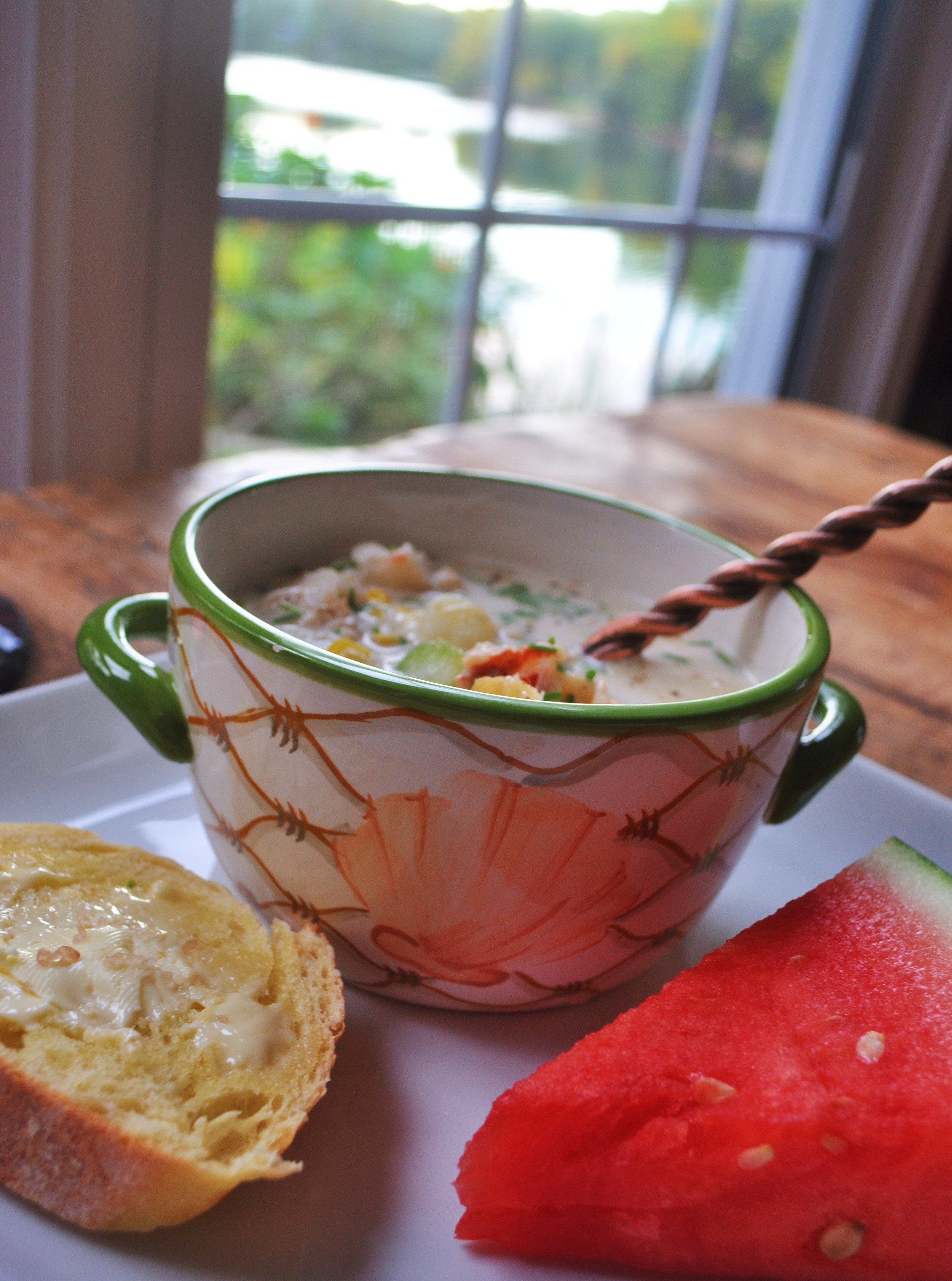
It is the peak of summer. Time for lobster and corn on the cob. While both are abundant, I decided to make a Chowder on a rainy summer day. It is not hard at all. I used lobster tails that I found on sale and some claws I had frozen for this, but usually I use live lobsters. I always save the shells for stock. This makes enough for 6 servings and reheats well.

Ingredients: 

  • 2 (1 1/2-pound) cooked lobsters, cracked and split (reserve shells) Boil in Spice and Tea Exchange Crab and Shrimp Boil
  • 4 ears corn

For the stock:

  • 6 tablespoons (3/4 stick) unsalted butter
  • 2  yellow onions finely chopped
  • 1/2 cup sherry
  • 1 teaspoon sweet smoked paprika
  • 4 cups whole milk
  • 2 cups heavy cream
  • 1 cup dry vermouth

For the chowder:

Method:

  • Remove the meat from the shells of the lobsters. Cut the meat into large cubes and place them in a bowl. Cover with plastic wrap and refrigerate.
  • Reserve the shells and all the juices that collect.
  • Grill the corn by removing the stocks and silk, spray lightly with olive oil. Grill on medium heat for 2 minutes on each side.
  • Allow the corn to cool, then cut the corn kernels from the cobs and set aside, reserving the cobs for stock. I use a great corn cutter made by OXO. It really works well. There are not a lot of gadgets that impress me, but this one does.

For the stock:

  • Melt the butter in a stockpot or Dutch oven large enough to hold all the lobster shells and corncobs.
  • Add the onion and cook over medium-low heat for 7 minutes, until translucent but not browned, stirring occasionally.
  • Add the sherry and paprika and cook for 1 minute.
  • Add the milk, cream, wine, lobster shells and their juices, and corn cobs and bring to a simmer. Partially cover the pot and simmer the stock over the lowest heat for 30 minutes.

For the chowder:

  • In another stockpot place the shallots, celery and butter or olive oil. Stir until slightly translucent.
  • Add the potatoes, corn kernels, salt, and pepper to the same pot and saute for 5 minutes.
  • Add the flour and stir in and add a ladle full of the stock.
  • Remove the largest pieces of lobster shell and the corn cobs with tongs and discard.
  • Place a strainer over the soup pot and carefully pour the stock into the pot with the potatoes and corn.
  • Simmer over low heat for 15 minutes, until the potatoes are tender. Add the cooked lobster, the chives,  and the sherry and season to taste. Heat gently and serve hot.

Squash Blossoms

Standard

Image

Squash or pumpkin blossoms offer up multiple opportunities. While in cooking school in Mexico, we used them as a filling ingredient for quesedillas, empanadas and tacos. They were also tossed in salads and soups for color and nutrition. Of course they are also lovely when filled and fried or baked. Squash blossoms are a unique ingredient. Unless you have a big patch of squash or pumpkins, you are at the whim of the farmer who brings these highly perishable ingredient to market. At the Charleston Farmer’s Market yesterday, I spied a little box of the blooms and grabbed it. My mind was swimming with filling ideas as we drove home. I decided on some queso fresco that I bought at a small Hispanic market on John’s Island with herbs and peppers & a little mascarpone for smoothness.

Image

The recipe:

Ingredients

10-12 squash blossoms

1/2 cup queso fresco ( you can also use a creamy feta) allow it to warm up to room temperature

1 jalapeno or hotter pepper if you want more spice cut into small pieces

3 tablespoons mascarpone or cream cheese

a hand full of grated jack cheese

1 Tablespoon TSTE Vik’s Garlic Fix

1 Tablespoon of TSTE Aleppo chile

6 sprigs of cilantro

salt and pepper to taste

For batter:

1 1/2 cups flour

1 can or bottle of beer

salt and pepper

Method

About 2 hours before you plan to serve, mix the beer and flour together with salt and pepper. Cover and leave on the counter.

Clean blossoms by brushing off any soil, do not run under water. Pull out the stamen.

For filling:

Place the cheeses, cilantro, Vik’s Garlic Fix, aleppo pepper, jalapeno and salt and pepper in the small bowl of a food processor. This can also be done by hand, but if you are doing it that way, you will need to finely chop the pepper and cilantro.

Pulse until the filling is smooth. Using a spatula, fill a small zip lock bag. Push all of the filling down so that there is no air in the bag. Just before filling cut a small piece of the corner off and pipe the filling into the blossom, carefully wrapping the petals around the filling. Leave the top 1/2 inch unfilled and twist to enclose the filling. Refrigerate.

In a large pot or fryer heat peanut or canola oil (at least 3 inches) to 375 degrees.

Image

Put a few stuffed blossoms into the batter and then place carefully into the hot oil. After about a minute of frying, turn the blossoms and allow them to fry till golden. Remove with a spider and drain. Serve immediately.

ImageYou can find another post of mine about squash blossoms made with sourdough batter here on my Hawaii blog.